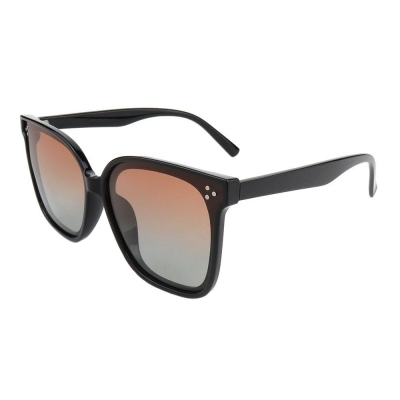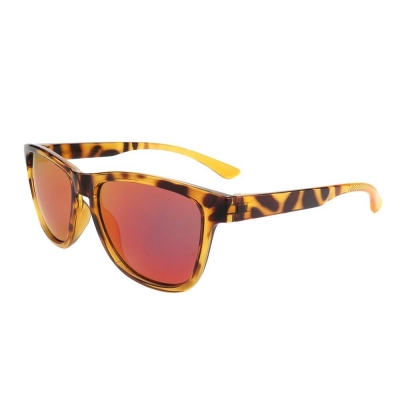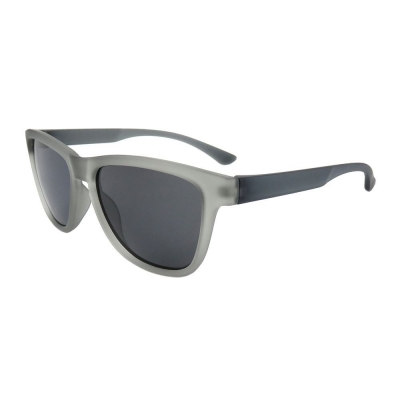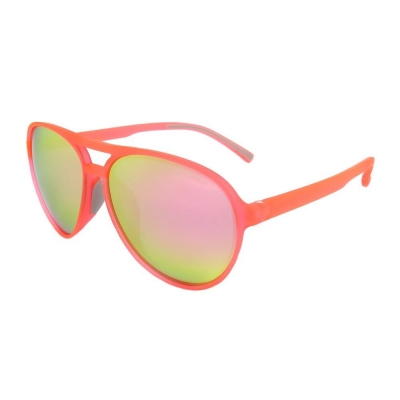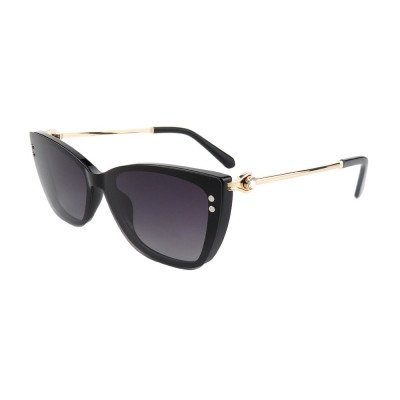

The global eyewear market is entering a defining inflection point in 2026. Independent labels and specialty retailers that once competed on price alone are now discovering that a well-executed private label program can deliver gross margins exceeding 30% above comparable wholesale alternatives. Whether you are a startup eyewear brand testing your first 50-piece run, a brick-and-mortar optical retailer looking to anchor your floor with exclusive house frames, or a DTC e-commerce operator scaling a branded line, the formula is the same: align with a vertically integrated OEM/ODM partner that offers end-to-end customization, built-in compliance certification, and the flexibility to grow with your volume. This playbook breaks down every stage of that journey — from profit-matrix analysis and material selection all the way through CE/FDA certification and global logistics delivery.
Independent and niche private label eyewear brands are growing at 2.8 times the rate of legacy international houses in 2026, driven by a fundamental shift in how consumers across Europe, North America, the Middle East, and Southeast Asia discover and purchase frames. Today's optical buyer actively seeks brands with a distinct design identity, a transparent supply chain, and a clear sustainability narrative — criteria that mid-sized legacy brands are structurally slow to meet. For small-to-medium importers and brand operators, this is precisely the opportunity: move early, move decisively, and build the brand equity that turns a first-time buyer into a lifetime customer.
Simultaneously, regulatory barriers are rising. FDA 21 CFR Part 801 compliance in the United States and CE EN ISO 12312-1 certification in the European Union are no longer optional recommendations — they are hard market-entry requirements enforced at customs clearance. Brands without certified documentation are being delisted by major optical distributors and rejected outright by omnichannel retail buyers. Partnering with a manufacturer that maintains full in-house compliance capability is no longer a differentiator; it is the baseline for doing business in premium markets.
Material selection is the single most consequential decision in private label eyewear development. It determines your per-unit landed cost, your retail price ceiling, your target customer profile, and ultimately, the gross margin your collection will reliably deliver season after season. The table below presents a direct profit-matrix comparison across the four material categories that dominate premium private label programs in 2026.
| Material Type | Unit Cost Range (FOB) | Target Gross Margin | Core Customer Profile | Competitive Advantage |
|---|---|---|---|---|
| Bio-Based TR90 | $1.20 – $2.80 | 65% – 75% | Mass-market fast fashion, sport and outdoor brands | Ultra-light, shatter-resistant, eco-certified; low MOQ enables rapid seasonal turnover |
| Handcrafted Acetate | $3.50 – $8.00 | 70% – 85% | Premium fashion, independent optical boutiques, affordable-luxury labels | Superior color depth and material texture; high craft premium; core margin driver for in-store retail |
| Pure Titanium / Beta-Titanium | $6.00 – $15.00 | 80% – 90% | Premium business professionals, luxury optical chains | Hypoallergenic, corrosion-proof, featherweight; highest ASP and repeat purchase rate in portfolio |
| Recycled Ocean Plastic | $2.20 – $4.50 | 70% – 80% | Sustainability-led brands, Gen Z lifestyle labels | Compelling origin narrative; strong ESG differentiation; aligns with 2026 global sustainable consumption mandate |
Jings Eyewear has refined a six-stage production methodology purpose-built for brand operators who require both creative flexibility and commercial predictability. Each stage is designed to minimize your financial exposure, compress development timelines, and maximize the probability that your collection launches on schedule, on spec, and fully compliant in every target market. Below is a granular walkthrough of how each step protects your investment and accelerates your go-to-market timeline.
|
01
Brand Positioning |
Step 1: Brand Positioning & Style Matrix DevelopmentBefore a single design file is opened, the Jings commercial team conducts a structured brand discovery session with each client. We map your target consumer demographic, preferred retail price tier, competitive landscape, and seasonal launch calendar into a Style Matrix — a proprietary planning framework that defines which frame silhouettes, colorways, and material combinations will deliver the highest sell-through rate and margin contribution for your specific market position. This upfront alignment eliminates costly mid-development pivots and ensures every design decision is commercially grounded. Start Your Brand Discovery |
Step 2: Material Selection & Profit ModelingOnce the Style Matrix is agreed, Jings' sourcing and finance teams co-build a detailed Profit Model for your collection. We calculate the fully landed unit cost — inclusive of materials, labor, tooling amortization, compliance testing, and freight — against your stated retail price points, and model gross margin scenarios across multiple order volume thresholds. This gives brand operators a clear, defensible financial picture before any capital is committed to tooling, eliminating the most common cause of private label program failure: cost overrun discovered post-production. Request a Free Profit Model |
02
Material Selection |
|
03
3D Design & Brand |
Step 3: 3D Design & Brand Identity CustomizationJings' in-house industrial design team translates your Style Matrix brief into full parametric 3D CAD models using Rhinoceros and SolidWorks. Every customizable element — temple logo engraving, hinge mechanism, nose pad geometry, acetate color matching, and optical lens curvature — is documented in a detailed Technical Design Package (TDP) that serves as the binding specification for all downstream production stages. Clients receive multiple design iterations with photo-realistic renderings before any physical tooling is initiated, providing full visual sign-off confidence at zero incremental cost. View Design Portfolio |
Step 4: 7-Day Rapid Prototyping & Test ModificationOnce the TDP is approved, Jings initiates rapid prototype production using SLA 3D printing and hand-crafted acetate pre-production samples. Physical prototypes are typically delivered within 7 business days of TDP sign-off. Clients receive pre-production samples for fit testing, color verification, and logo placement review, with one full round of modification included at no additional charge. This rapid iteration capability significantly compresses the traditional 45- to 60-day prototype cycle, allowing brands to move from concept confirmation to production launch in a single quarter. Request Free Sample |
04
Rapid Prototyping |
|
05
Mass Production |
Step 5: Flexible Mass Production & Full-Process Quality ControlProduction at Jings operates on a flexible manufacturing model that accommodates order volumes from 50 units per SKU up to 50,000 units per month across all material categories. Every production batch passes through a five-checkpoint quality control protocol: incoming material inspection, in-process dimensional verification, surface finishing inspection, assembled unit functional test, and final pre-shipment audit. Clients receive a fully documented QC report with each shipment, including photographic records of random batch samples — a requirement increasingly demanded by EU and US retail buyers for vendor qualification. Explore Production Capacity |
Step 6: CE/FDA Full-Scope Certification & Global Logistics DeliveryJings manages the complete compliance certification process in-house, including CE EN ISO 12312-1 for European optical and sunglass products, FDA 21 CFR Part 801 for US market entry, and UKCA for Great Britain post-Brexit. Certification documentation, including Declaration of Conformity, test reports, and technical construction files, is prepared as a client-ready package that can be submitted directly to distributors and retail buyers. Jings coordinates global delivery via DHL, FedEx, and sea freight consolidation, with full tracking visibility and customs clearance support on all major trade lanes. Check Certification Coverage |
06
CE/FDA Certification |
Experienced brand operators know that gross margin is not determined at the point of sale — it is engineered during the sourcing and product development stage. The following three strategies are drawn directly from Jings' advisory work with over 200 private label clients across 35 countries, and represent the highest-impact levers available to brand operators looking to meaningfully improve collection profitability without compromising product quality or brand integrity.
|
WhatsApp
Instant messaging for sample requests, pricing inquiries, and product briefings. Typical response within 2 business hours. Chat on WhatsApp |
Email
Send your detailed collection brief, technical specifications, or trade inquiry directly to our international business team. Email Chris Directly |
Contact the Jings Eyewear team today to receive your complimentary 2026 Private Label Profitability White Paper, a customized margin modeling report for your target category, and free material samples with design prototyping service. No commitment required — just the information you need to make a fully informed sourcing decision.
The private label eyewear opportunity in 2026 is real, measurable, and time-sensitive. Consumer demand for independently branded, design-led, and sustainably sourced eyewear is outpacing the supply of brands capable of delivering it — creating a clear commercial opening for operators who move decisively and partner with a manufacturer who can execute at every stage of the value chain. Jings Eyewear brings 15-plus years of OEM/ODM expertise, a full-scope compliance infrastructure, and a genuinely flexible low-MOQ production model to every client engagement. The first step toward your most profitable collection to date is a single conversation. Reach out to the Jings team today, and let us build your profitability case together.


Please Read On, Stay Posted, Subscribe, And We Welcome You To Tell Us What You Think.



Copyright @ 2026 Xiamen Jings Eyewear Co., Ltd. All Rights Reserved.
 Network Supported