

Shield sunglasses can give a collection an immediate performance or fashion-led identity, but the silhouette alone is not a production specification. A brand still needs to decide whether the product uses one continuous shield lens or two separate wrap lenses, how much curve and coverage the wearer needs, how the frame should fit with helmets or caps, and which lens functions must be verified on samples. This guide turns those decisions into a practical brief for a sports sunglasses OEM or ODM project.
Quick answer: Start by locking the product architecture, target activity, wearer profile, lens curve, coverage, nose support, temple fit, ventilation, and lens function. For a first order, an existing platform with controlled color, lens, logo, and packaging changes usually reduces development risk. Move to deeper structural changes or private tooling only when the brand has a clear fit requirement, sales case, and sample-validation plan.
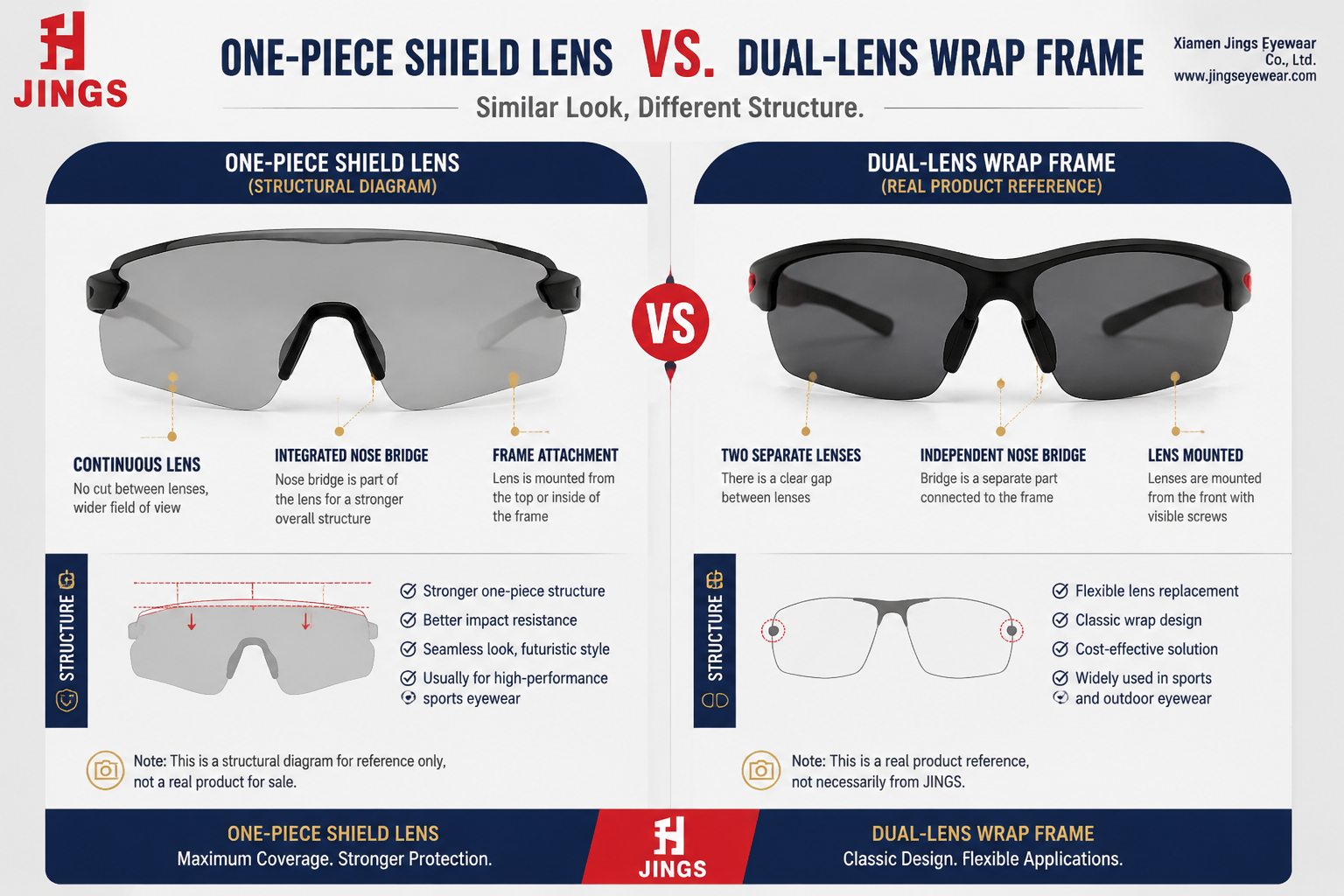
Buyers often use the words shield, visor, blade, and wraparound for several different constructions. That creates problems when reference images are sent without a dimension sheet. A true shield normally uses one continuous lens across the front. A two-lens wrap frame can create a similar performance look, but it has separate left and right lenses and a different bridge, assembly, replacement, and optical-control logic.
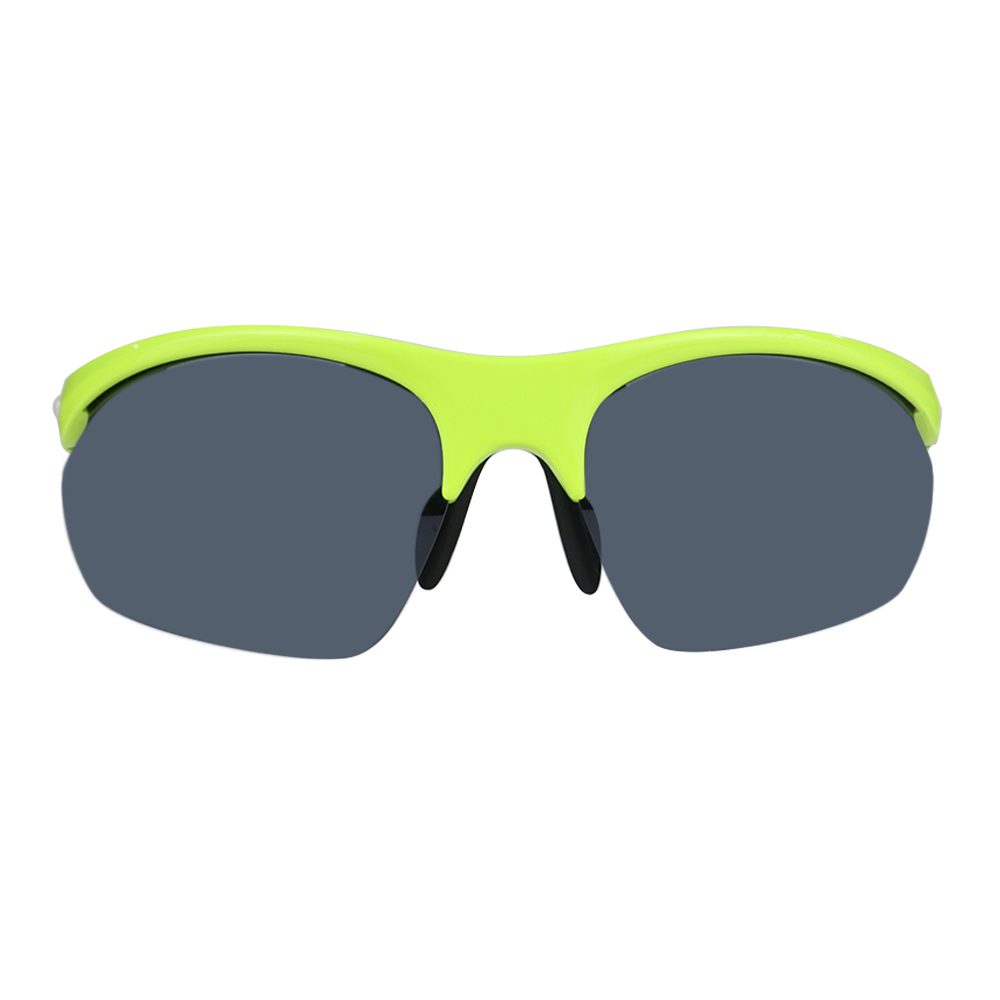
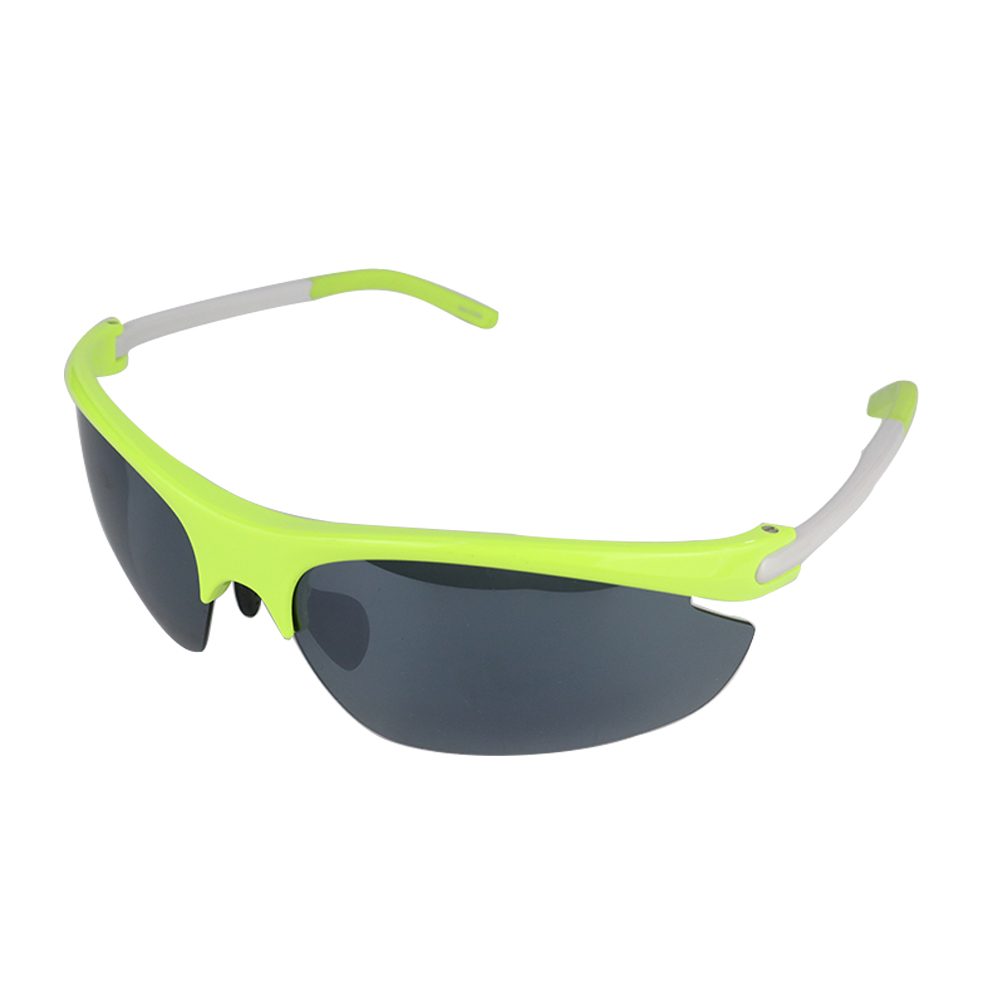
This real product image shows a two-lens wrap construction, not a one-piece shield. The front view helps buyers compare lens separation, bridge coverage, lens height, and nose support before deciding which architecture belongs in the brief.
| Decision | One-Piece Shield | Two-Lens Wrap |
| Visual effect | Continuous visor-like front with a strong sport or fashion statement. | Performance look with a more familiar left-and-right lens layout. |
| Sample focus | Lens curve, center geometry, attachment points, edge finish, ventilation, and replacement method. | Frame-to-lens matching, left-right symmetry, bridge fit, lens retention, and individual lens alignment. |
| Customization risk | Large lens area makes color, coating, printing, curve, and cosmetic consistency highly visible. | More frame structure may make color blocking and component replacement easier, depending on the design. |
| Good starting use | Cycling, running, outdoor, and fashion-led collections that need a clear shield identity. | Broader sport collections that want wrap coverage with a more conventional construction. |
The three decisions interact. A stronger wrap may improve side coverage, but it can also change peripheral optical comfort, temple position, lens-to-face clearance, and compatibility with prescription solutions. A larger lens can increase coverage while making ventilation and weight distribution more important. Buyers should approve the complete product on real wearers rather than approving the frame, lens, and nose pad as isolated components.
Sports eyewear is often discussed using base-curve terminology, but one number does not prove optical quality or wearer comfort. The frame curve, lens geometry, mounting position, wrap angle, tilt, material, and intended prescription route all matter. If prescription compatibility is part of the project, confirm it before selecting the shield architecture. A plano shield, an optical insert, and a compensated prescription sport lens are different development routes.
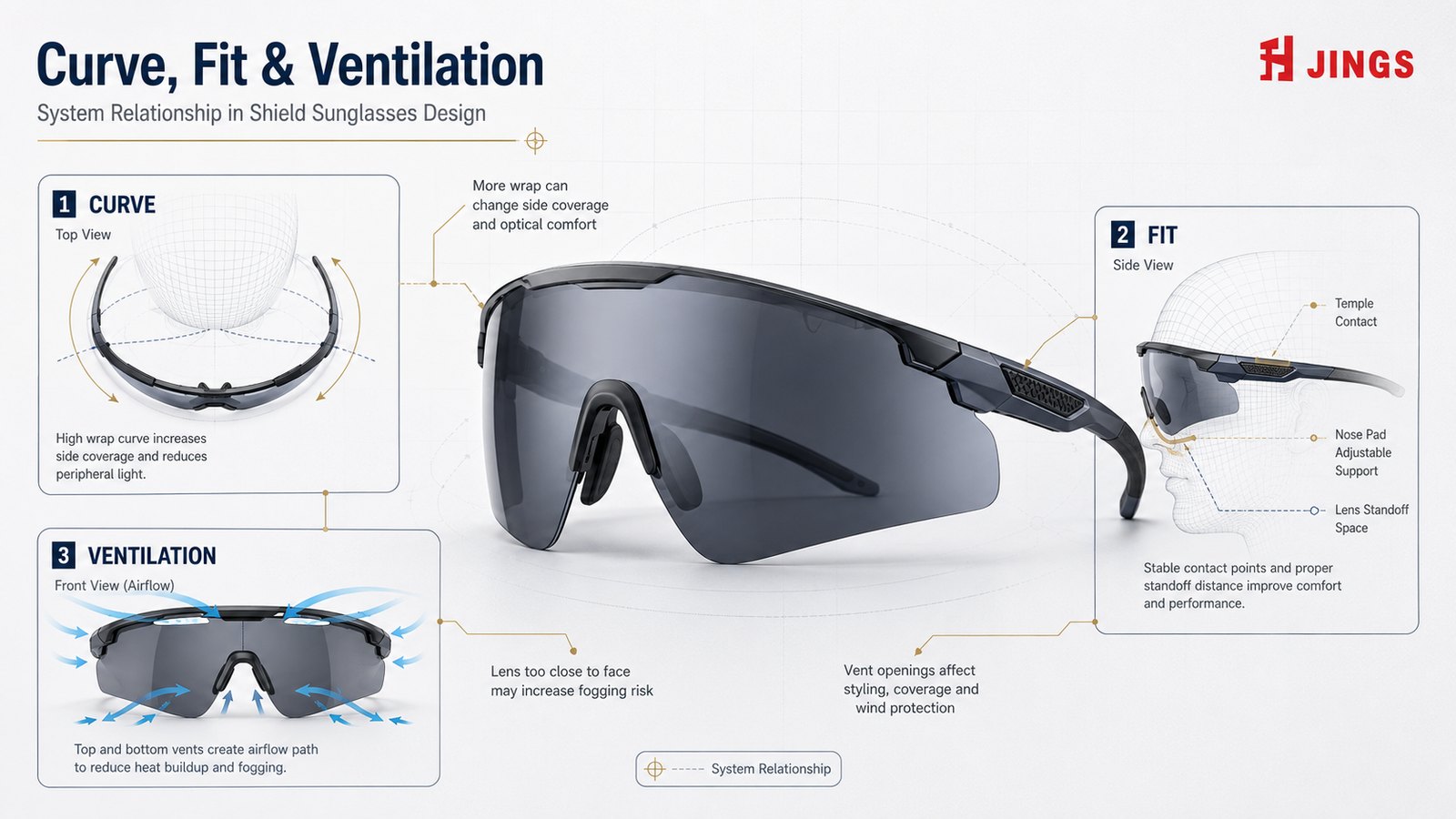
Lens color does not define UV performance, polarization, visible light transmission, or coating durability. A usable RFQ separates each requirement so the quotation and sample approval refer to the same configuration. Buyers can review relevant optical coating options and the lens materials guide before fixing the lens brief.
| Lens Field | What to Specify | What to Approve |
| Material | Required substrate and intended product use. | Clarity, edge quality, fit in the frame, and documentation relevant to the target market. |
| Color and VLT | Color reference, gradient or solid effect, and intended light condition. | Approved sample, visual consistency, and measured transmission when required. |
| UV requirement | Target UV requirement and applicable market documentation. | Test report or supplier documentation for the agreed product when applicable. |
| Polarization | Required or not required, plus the intended glare environment. | Polarized effect, axis consistency, screen interaction, and cosmetic appearance. |
| Coating | Mirror, anti-reflective, hydrophobic, or other requested treatment. | Color, adhesion, scratch appearance, edge consistency, and cleaning behavior on samples. |
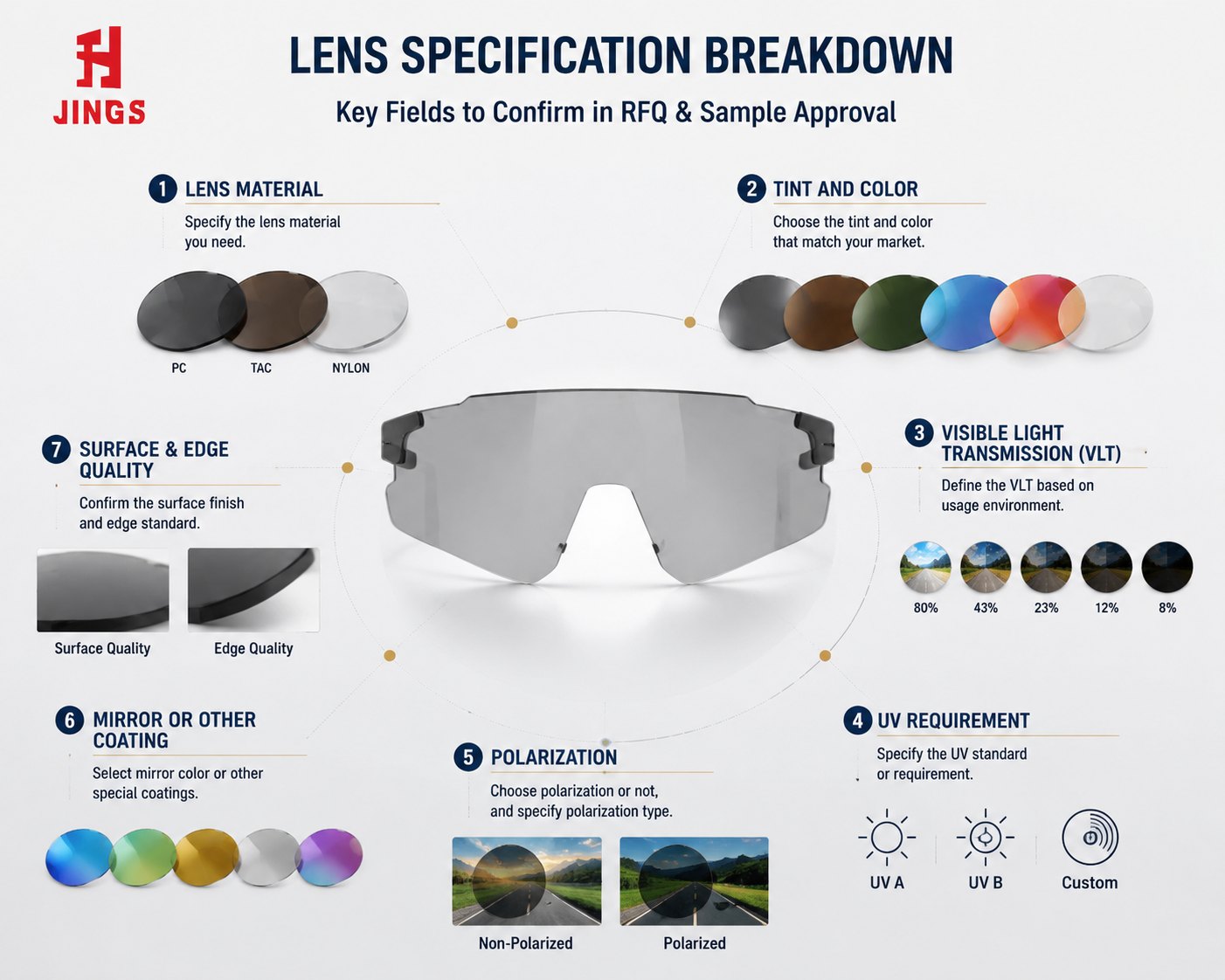
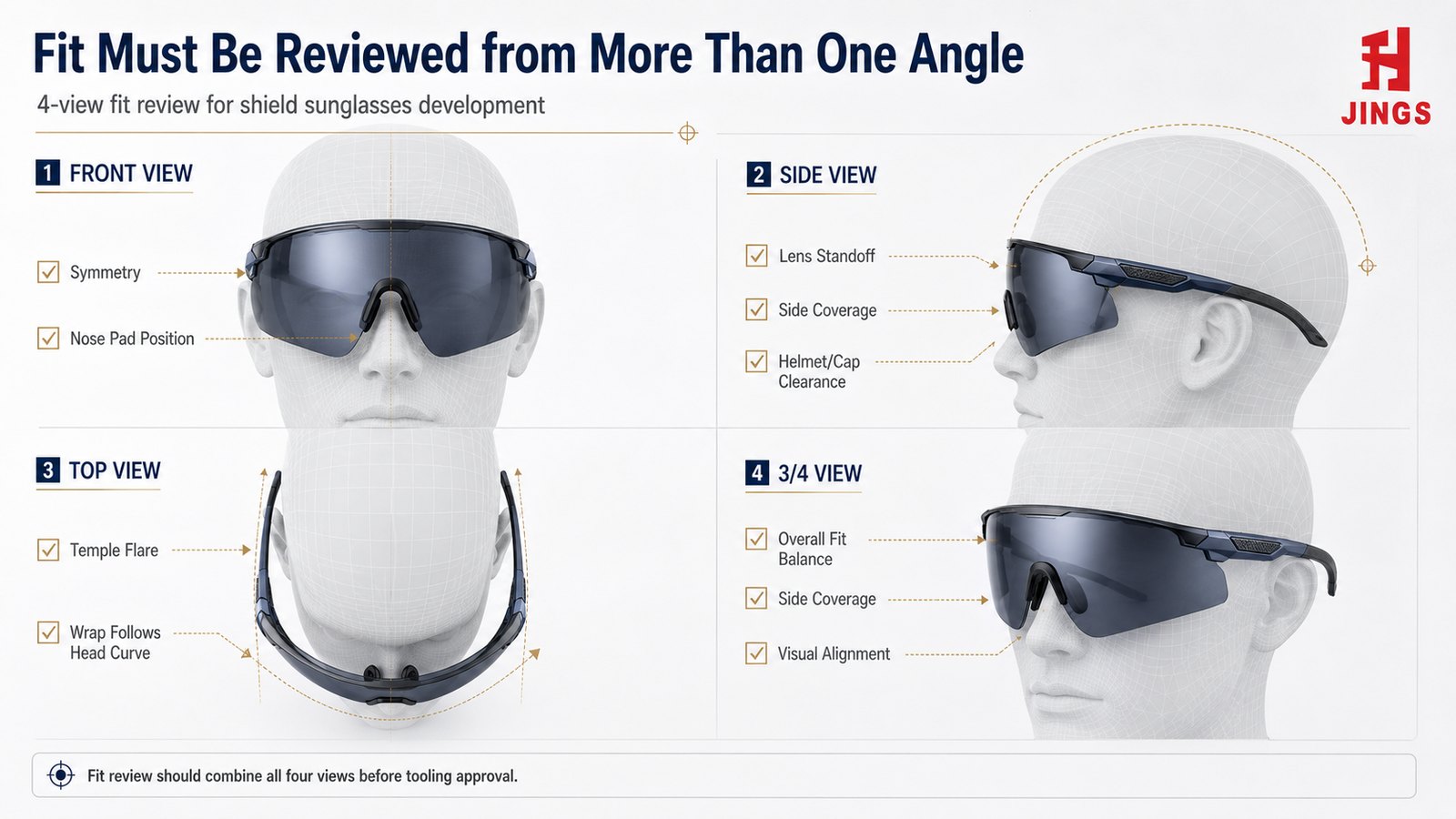
Front-view approval can hide temple flare, uneven lens seating, excessive curvature, or a nose area that sits too close to the face. Ask for front, side, top, and three-quarter photographs with the same sample reference. Then test physical samples on wearers who represent the intended market.
The three-quarter view reveals temple direction, rear curvature, lens retention points, and the distance between the lens edge and wearer. For shield projects, request equivalent views before approving fit or helmet compatibility.
If the collection will use lightweight injection-molded frame components, compare available PC and TR90 sunglasses platforms without assuming a material from appearance alone. The selected material, component geometry, surface treatment, lens attachment, and target activity should be confirmed together.
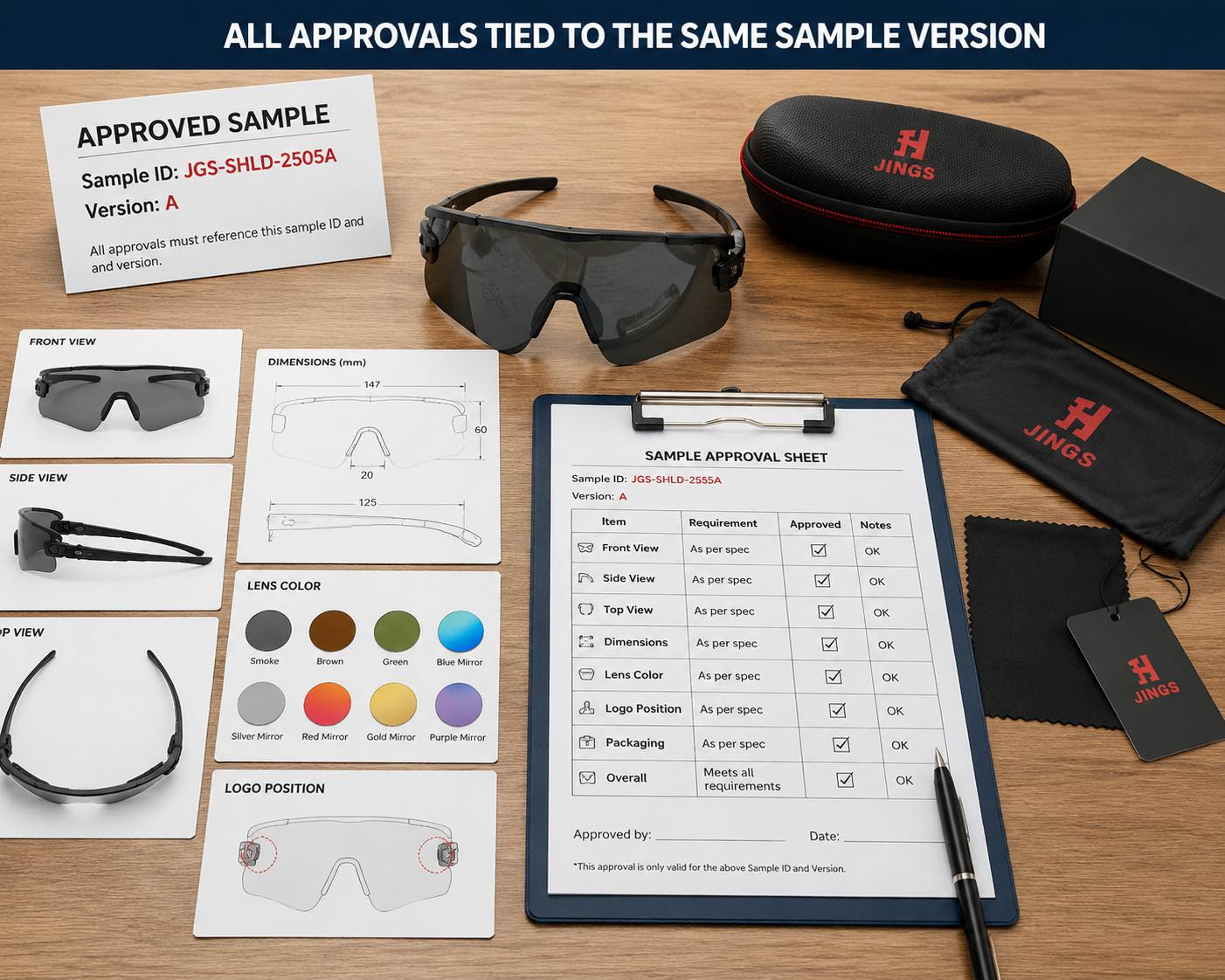
The signed sample should be more than a visual reference. It should connect measurable fields, approved components, photographs, lens requirements, logo position, packaging, and the target market. Any later change needs a written record and a decision on whether a revised pre-production sample is required.
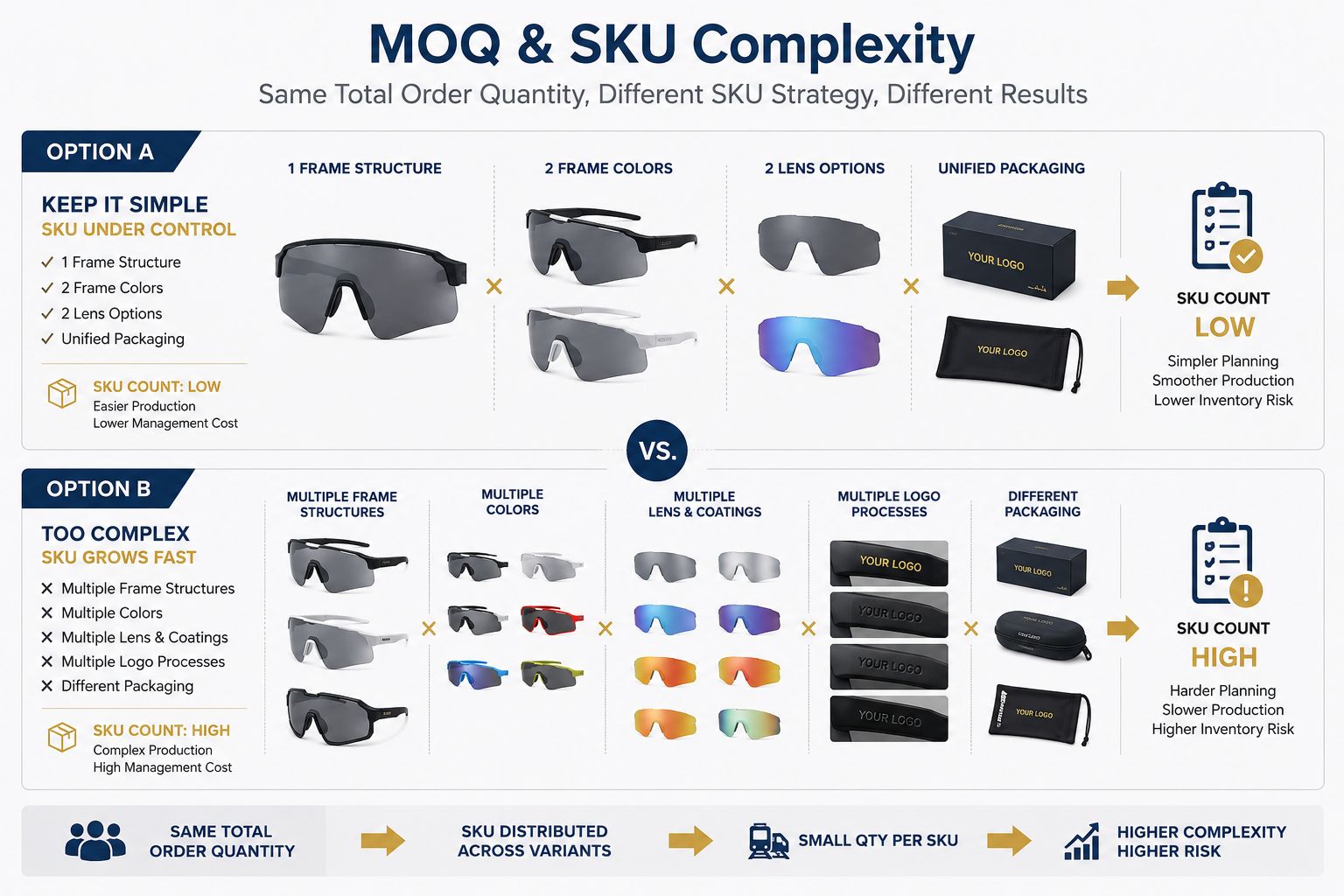
MOQ is affected by more than the frame. A shield project can create separate minimums for lens color, coating, frame color, logo method, accessories, and packaging. A small total order spread across too many combinations may be harder to execute than a larger order with a controlled SKU plan.
| Development Route | When It Fits | First-Order Control |
| Existing platform | A brand needs to test the category, channel, fit, or price point. | Keep the structure fixed. Limit lens colors and frame colors, then add a verified logo and practical packaging. |
| Modified ODM | The base fit works, but the brand needs selected component, color, lens, or trim changes. | Change only variables that improve the intended buyer proposition. Reconfirm samples and minimums after each structural change. |
| Full OEM or private tooling | The brand has a defined fit, architecture, IP plan, launch schedule, and expected volume that justify development. | Freeze the design brief before tooling, define ownership and revision rules, and budget for multiple sample rounds. |
Jingseyewear can discuss existing-platform changes, semi-custom ODM, and deeper development. Final MOQ, sampling time, and production timing depend on the selected frame, lens, coating, colors, logo, packaging, and testing requirements.
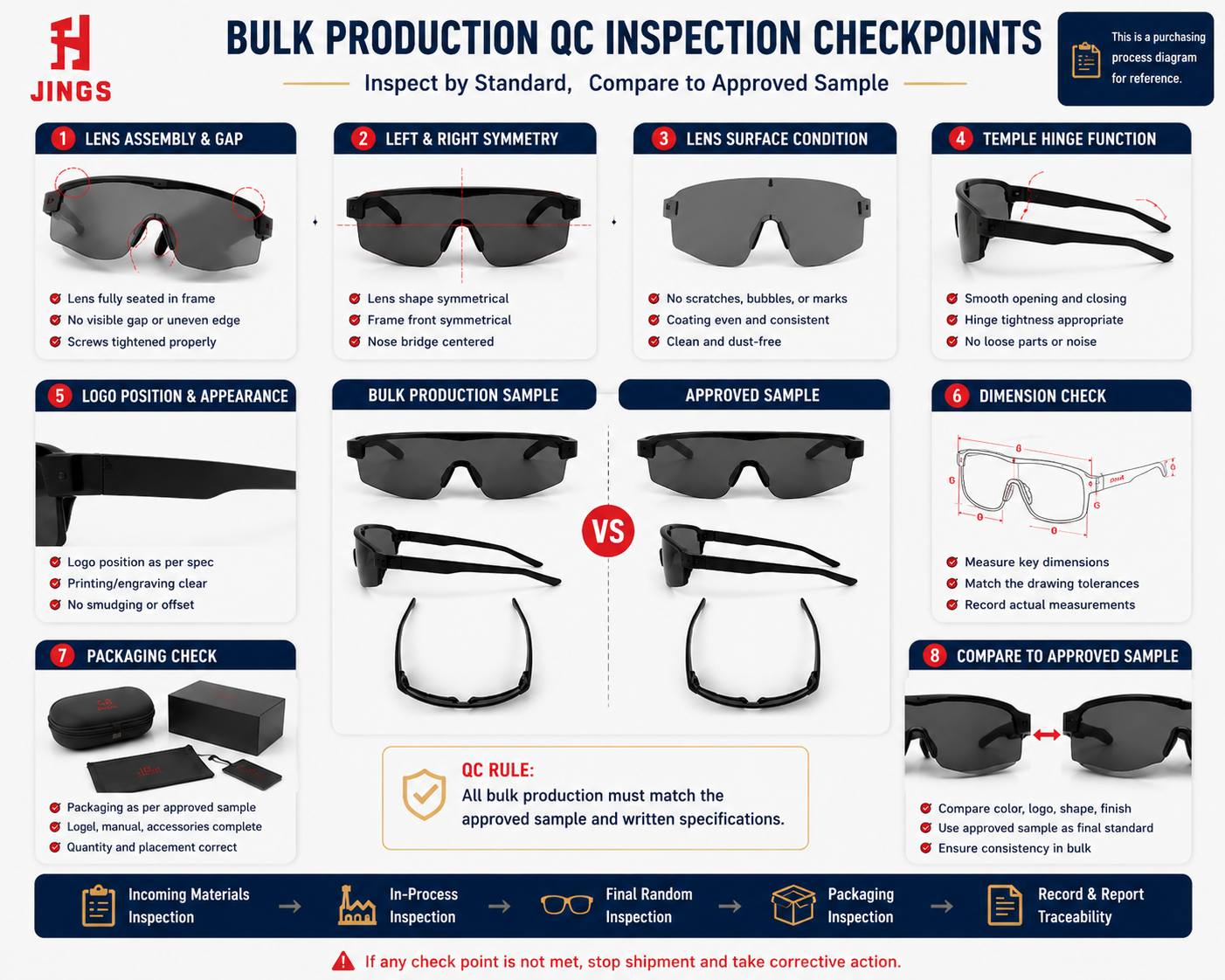
Bulk inspection should compare production units with the approved sample and written specification. For a shield or high-wrap product, cosmetic checks alone are not enough. The inspection plan should cover lens seating, optical comfort, symmetry, surface condition, fit-related measurements, moving components, logo position, and packaging.
For projects that need a clearer production and QC discussion, review Jingseyewear's technology and service capabilities.
Review existing sport-oriented product directions before deciding whether the project needs a new structure.
Compare existing-style branding, semi-custom changes, and deeper product development routes.
Use existing product references to communicate the target silhouette, fit, and customization level.
No. A shield normally uses one continuous lens, while a wrap frame may use two separate lenses. Confirm the architecture in the specification instead of relying only on a style name.
Options depend on the lens material, curve, construction, color, coating, supplier capability, and intended market. Confirm the exact combination on a physical sample and in the quotation.
Some projects use an optical insert or another prescription solution, but strong wrap and large shield geometry can create additional optical constraints. Define the prescription route at the beginning and have it reviewed by the appropriate optical specialist.
Send the target activity, market, quantity range, one-piece or two-lens preference, reference images, lens function, color direction, logo method, packaging scope, prescription requirement if any, testing expectations, and target launch window.
Send Jingseyewear your target activity, market, quantity range, preferred architecture, lens function, colors, logo, packaging, and launch window. The team can review whether an existing platform, a modified ODM route, or deeper OEM development better fits the project.
Send Your Shield Sunglasses Project DetailsA successful shield sunglasses OEM project starts with architecture and fit, not only appearance. When curve, coverage, ventilation, lens requirements, sample measurements, branding, packaging, and QC evidence are agreed before bulk production, brands can test the trend with a clearer product brief and fewer avoidable revisions.


Please Read On, Stay Posted, Subscribe, And We Welcome You To Tell Us What You Think.



Copyright @ 2026 Xiamen Jings Eyewear Co., Ltd. All Rights Reserved.
 Network Supported