

Acetate sunglasses are popular in private label eyewear because the material gives brands more control over color, pattern, texture, frame thickness, and decorative details. For B2B buyers, acetate customization is not only about choosing a beautiful color. It also involves market positioning, frame shape, rivet structure, lens matching, MOQ planning, sample approval, and final quality inspection.
This guide helps eyewear brands, importers, distributors, boutique retailers, and online sellers understand how to plan a custom acetate sunglasses project before requesting samples. Buyers can also review Jingseyewear's acetate sunglasses category to compare existing styles before discussing OEM/ODM customization.
After the frame shape, color, rivet details, and lens plan are confirmed, buyers should also review how the acetate surface will feel after cutting, smoothing, and final finishing. For a technical overview of how tumbling can support the acetate frame polishing process, this manufacturing reference explains the role of controlled motion, media contact, and process timing for acetate products.
For acetate frame customization, buyers should confirm four key elements first: color direction, pattern type, rivet or hinge detail, and frame shape. After that, confirm lens function, logo method, packaging, sample requirements, order quantity, and QC standards. The best result usually comes from selecting a clear market position before choosing decorative options.
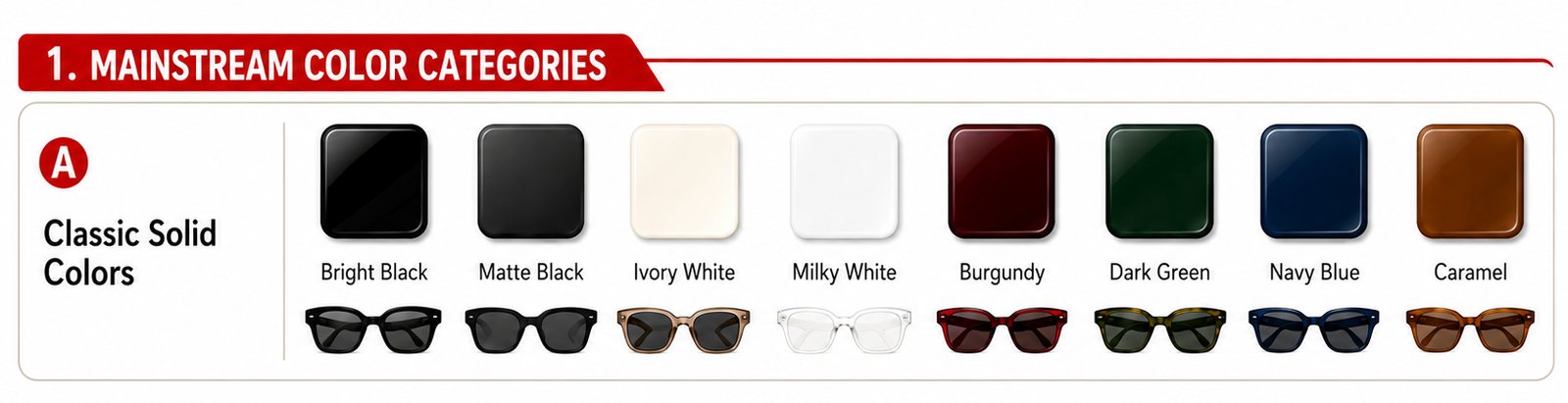 |
Start with the Color StrategyColor is usually the first customization decision because it directly affects customer perception. Classic black, ivory, burgundy, dark green, navy, caramel, crystal, amber, and gradient effects can serve very different markets. A private label collection should include safe commercial colors first, then add statement colors based on brand positioning. Review Eyewear OEM/ODM Services |
Acetate color selection should match the buyer's target channel. A boutique fashion brand may prefer transparent, gradient, or color-block effects. A distributor may prefer black, tortoise, dark green, navy, or caramel because these colors are easier to sell across different customer groups. For a first private label order, it is usually safer to limit the number of colors and confirm the strongest combinations through samples.
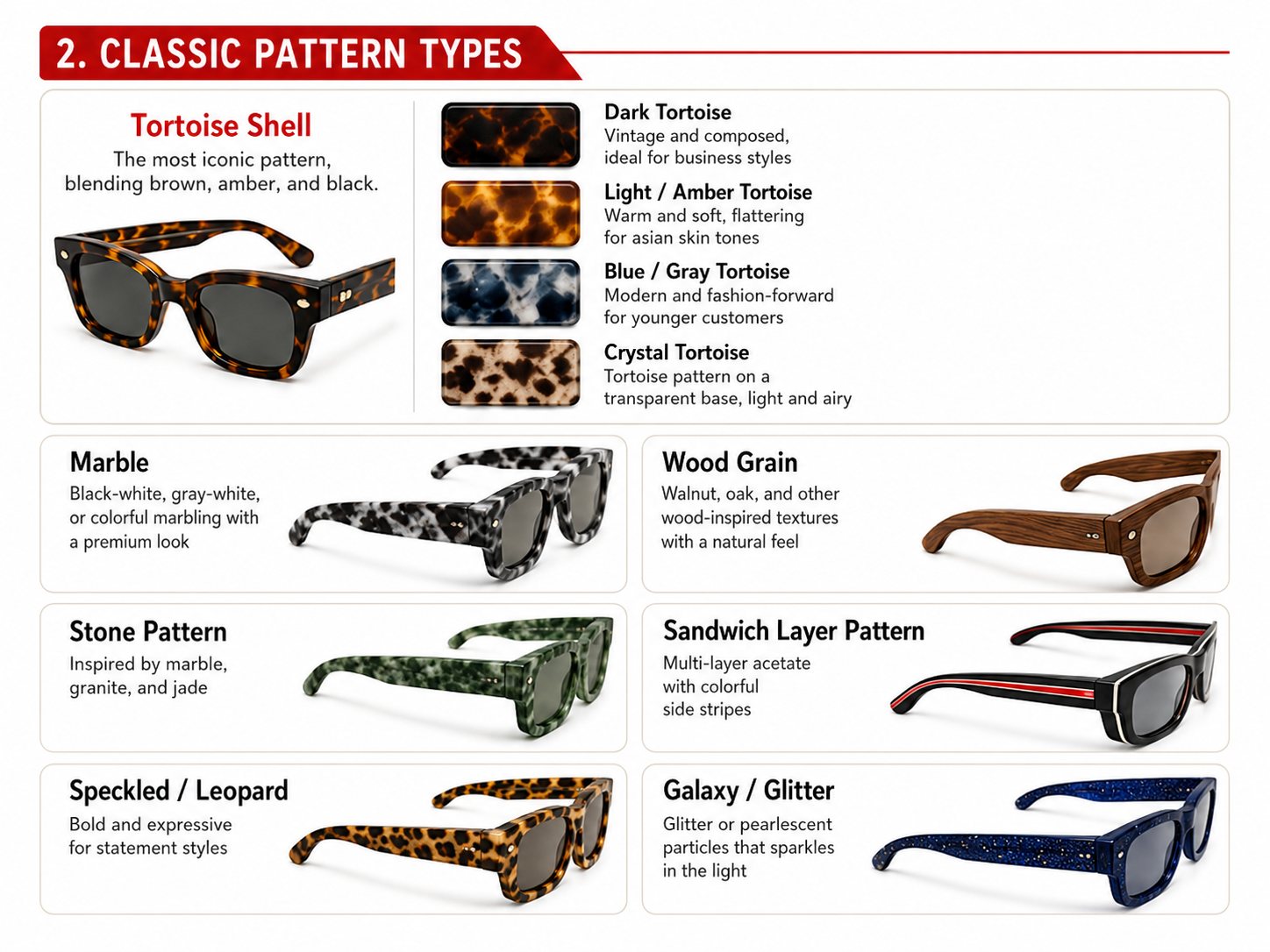 |
Choose Patterns by Brand PositioningTortoise, marble, wood grain, stone pattern, leopard, glitter, and sandwich-layer acetate can all create different brand impressions. A classic tortoise frame may fit business and lifestyle customers, while glitter or leopard patterns may fit fashion-forward collections. Buyers should always review real material samples because pattern density and color contrast can vary from screen images. Explore Branding Solutions |
| Pattern Type | Best For | Buyer Notes |
| Tortoise | Classic fashion, boutique retail, and daily lifestyle collections. | Confirm whether the tone should be dark, amber, gray, or crystal-based. |
| Marble or Stone | Premium visual collections and brands that want a material-focused look. | Pattern placement may vary, so sample review is important. |
| Sandwich Layer | Brands that want visible side stripes or layered color details. | Check side view, temple edge, and polishing quality before approval. |
| Glitter or Leopard | Statement fashion, festival, youth, and seasonal marketing collections. | Use carefully for first orders because the design is more niche. |
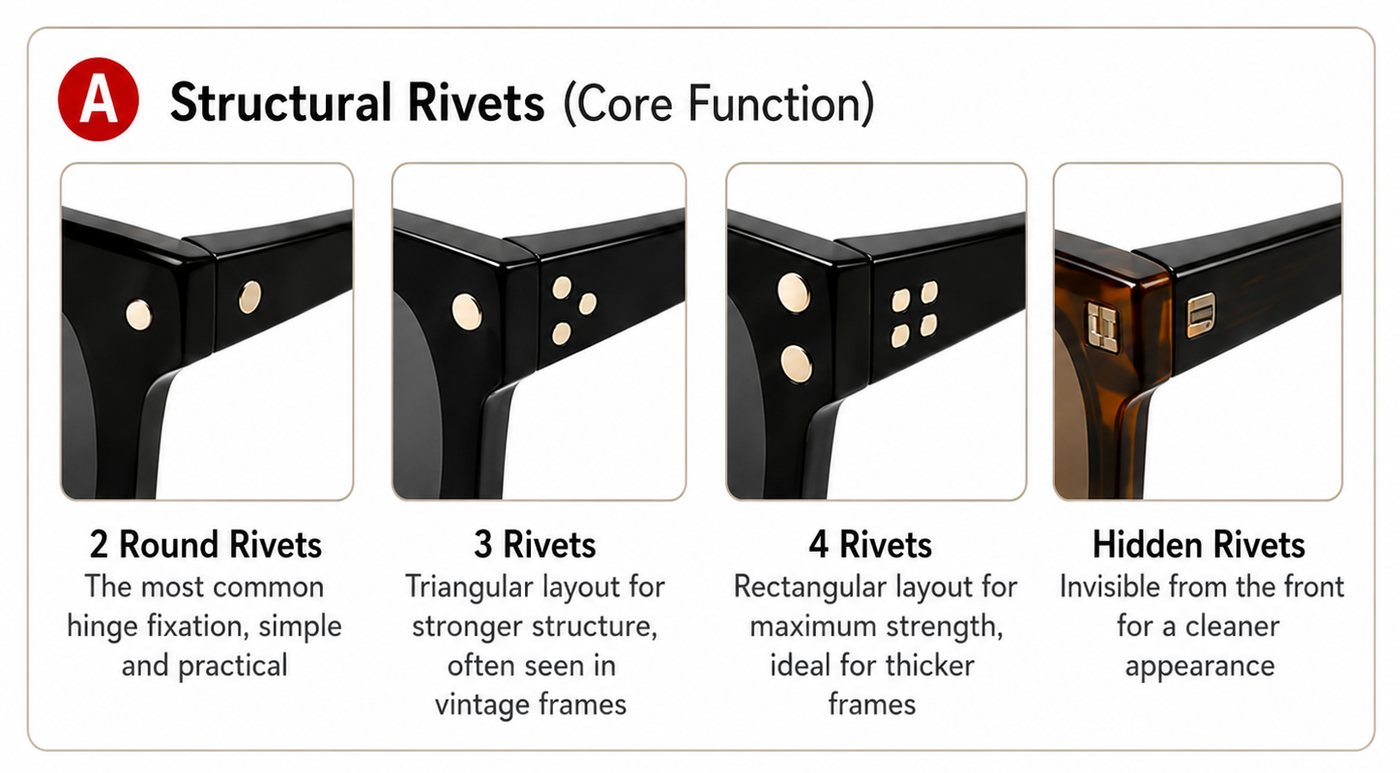
Rivets can be structural, decorative, or both. For acetate sunglasses, they influence hinge strength, front appearance, vintage style, and perceived quality. Buyers should confirm whether the project needs visible round rivets, multiple rivets, hidden rivets, flat pins, decorative metal details, or custom brand hardware.
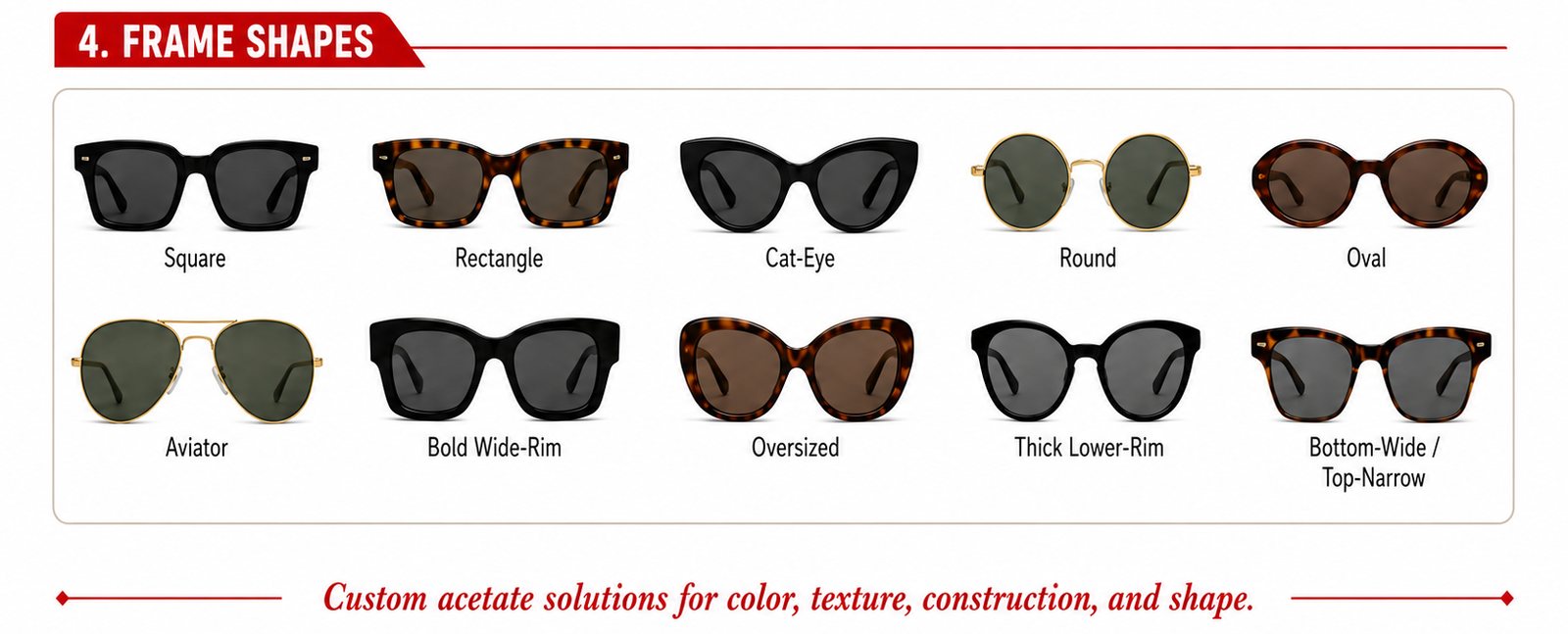
Frame shape decides how the final acetate design will be perceived. Square and rectangle frames are often commercial and easy to sell. Cat-eye, oversized, oval, and bold wide-rim styles may fit fashion brands. Round and aviator-inspired shapes can work for vintage or lifestyle collections. Buyers should match shape with face coverage, lens size, hinge design, and target customer group.
A good acetate project starts with a clear brief. Jingseyewear can help buyers compare style options, material directions, lens choices, logo methods, packaging plans, sample details, and quality requirements through its eyewear OEM/ODM services.
MOQ for acetate sunglasses depends on style availability, material selection, color combination, logo method, lens function, packaging, and whether the buyer is using existing models or developing deeper ODM adjustments. For first orders, it is often better to select fewer colors and focus on commercially reliable styles before expanding into complex patterns or custom hardware.
Acetate customization should always be confirmed through real samples before bulk production. Buyers should check surface polishing, pattern consistency, lens fitting, temple balance, hinge movement, rivet placement, logo appearance, and packaging accuracy. When applicable, CE, FDA, ISO9001, and SGS documents can be discussed through Jingseyewear's certificate page and confirmed according to the actual product and destination market.
Send Jingseyewear your preferred frame shape, acetate color, pattern direction, rivet style, lens requirement, logo idea, packaging plan, estimated quantity, and target market. The team can help review suitable styles, sample options, customization details, and QC requirements before bulk production.
Send Your Eyewear Project Details
Acetate sunglasses customization works best when color, pattern, rivets, frame shape, lens function, logo, packaging, and MOQ are planned together. Instead of choosing decorative options separately, buyers should build a clear collection strategy and confirm real samples before bulk production. This helps reduce sourcing risk and makes the final eyewear collection easier to sell in the target market.


Please Read On, Stay Posted, Subscribe, And We Welcome You To Tell Us What You Think.



Copyright @ 2026 Xiamen Jings Eyewear Co., Ltd. All Rights Reserved.
 Network Supported