

Cold foil logo stamping on eyewear temples is a controlled production process that begins before the foil is applied. A stable result depends on approved artwork, an exact placement brief, correct positioning, a suitable base layer, controlled drying, foil transfer, and inspection against the approved reference. For private-label buyers, the most important step is to confirm the logo information before tooling, sampling, or bulk production starts.
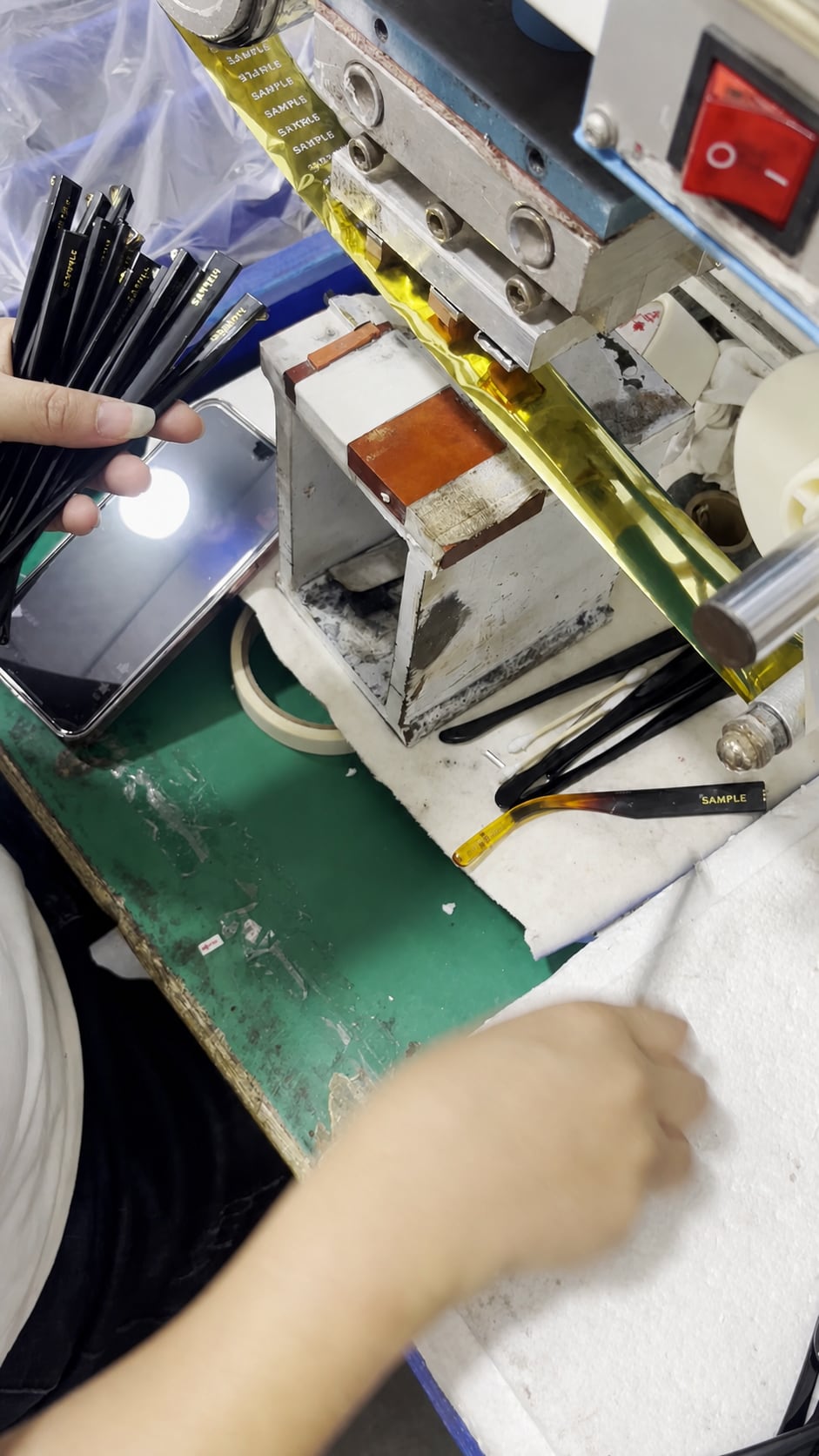
A usable production brief should identify the process, approved artwork version, foil color, logo dimensions, left or right temple, inside or outside position, and distance from a defined reference point. These details allow the production team to set up the screen, plate or stamping tool without interpreting an incomplete instruction.
Logo dimensions should follow the approved artwork. If a size adjustment is required, the artwork should be scaled proportionally so the type and graphic do not become distorted. The same approved file should remain the reference for later inspections.
| Brief field | What to specify | Why it matters |
|---|---|---|
| Artwork | Approved vector file and version | Prevents different logo versions from reaching tooling and inspection. |
| Dimensions | Logo height or width and proportional scaling rule | Controls legibility and reduces distortion. |
| Placement | Temple side, inside or outside, and distance from a reference point | Gives the operator a measurable setup target. |
| Finish | Foil color and physical approval reference | Screen colors cannot fully represent a reflective metallic finish. |
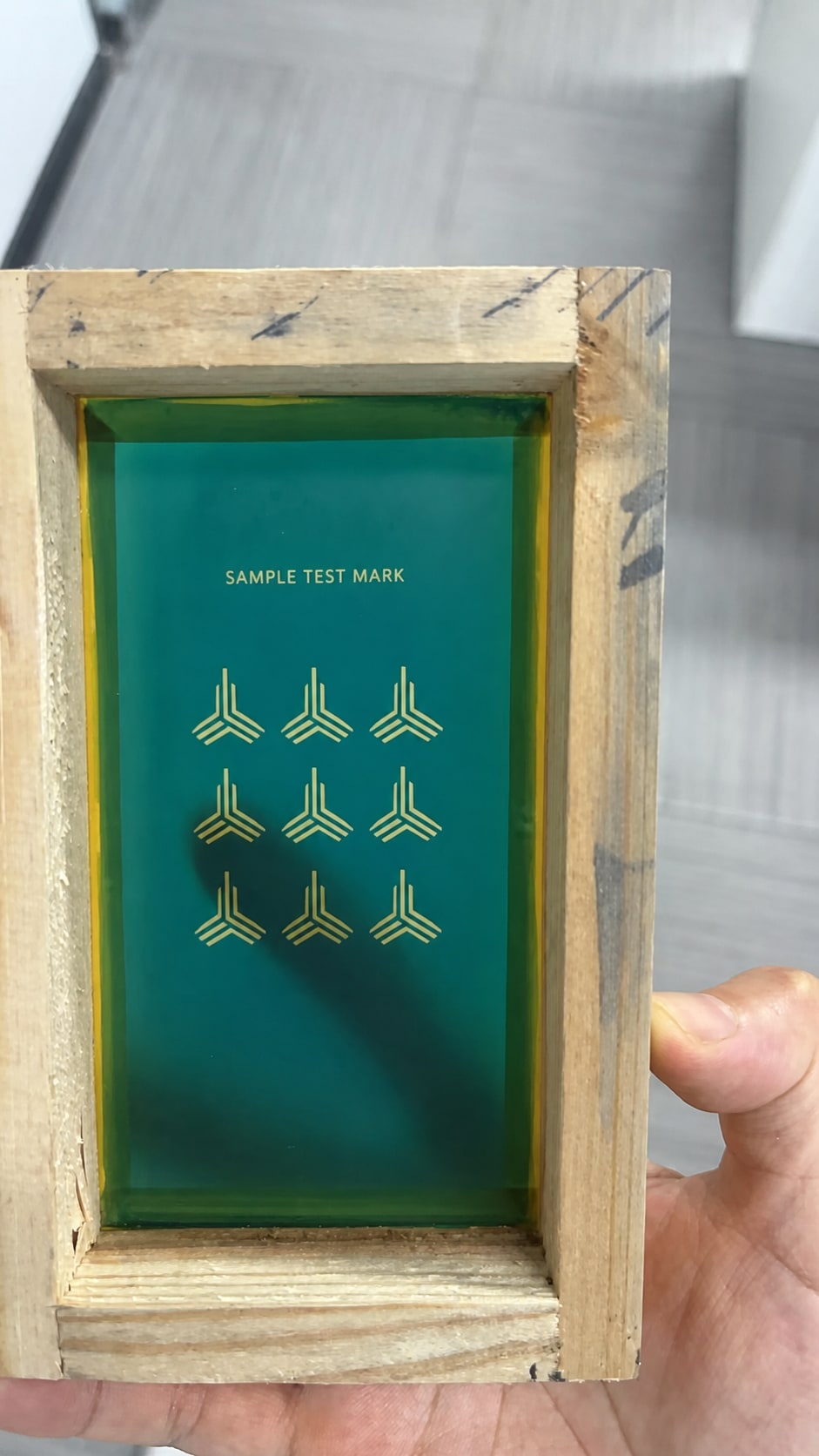
The team first checks the logo wording, proportions, dimensions, color and placement. Resolving a discrepancy at this stage is safer than stopping production after tooling or printing has begun.
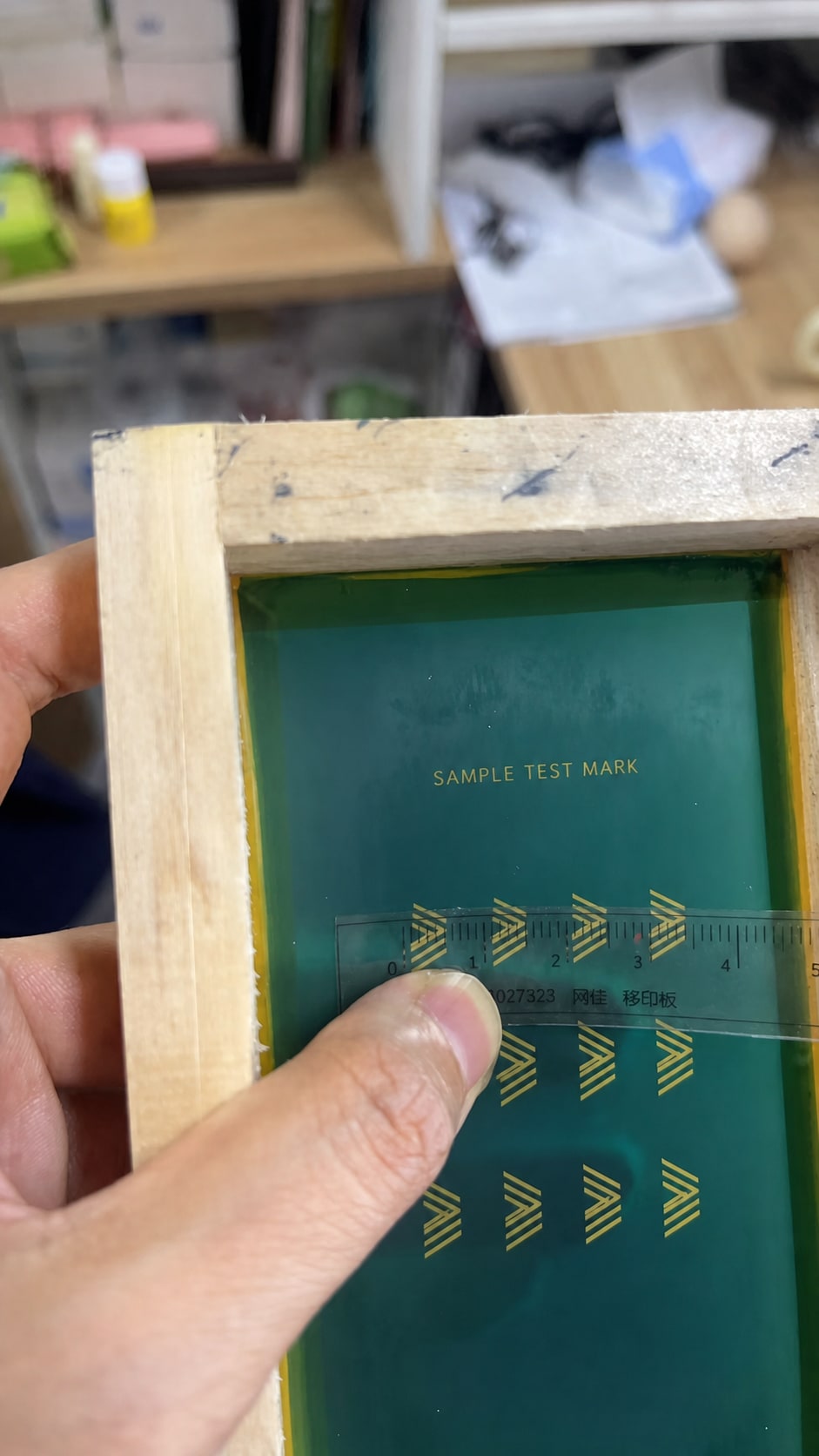
The operator aligns the temple and the logo position to the approved reference. This setup step is required regardless of whether the project uses screen printing, pad printing or foil application.
In the documented workflow, a base layer is printed before the metallic foil is transferred. This stage prepares the defined logo area for the next operation.
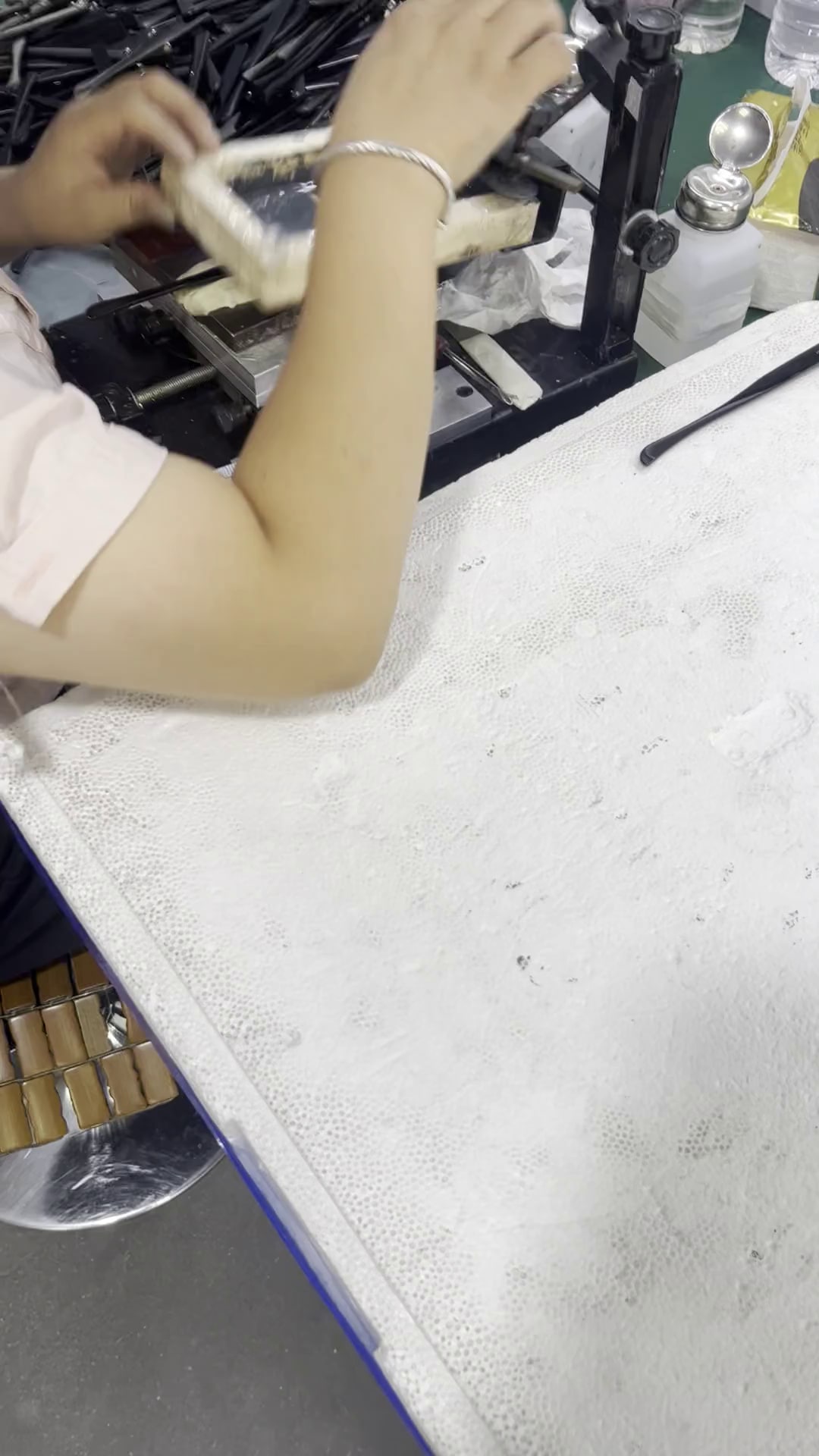
The printed parts complete the required drying stage before foil transfer. Moving forward before the surface is ready can affect process consistency, so the sequence should follow the approved materials and production settings.
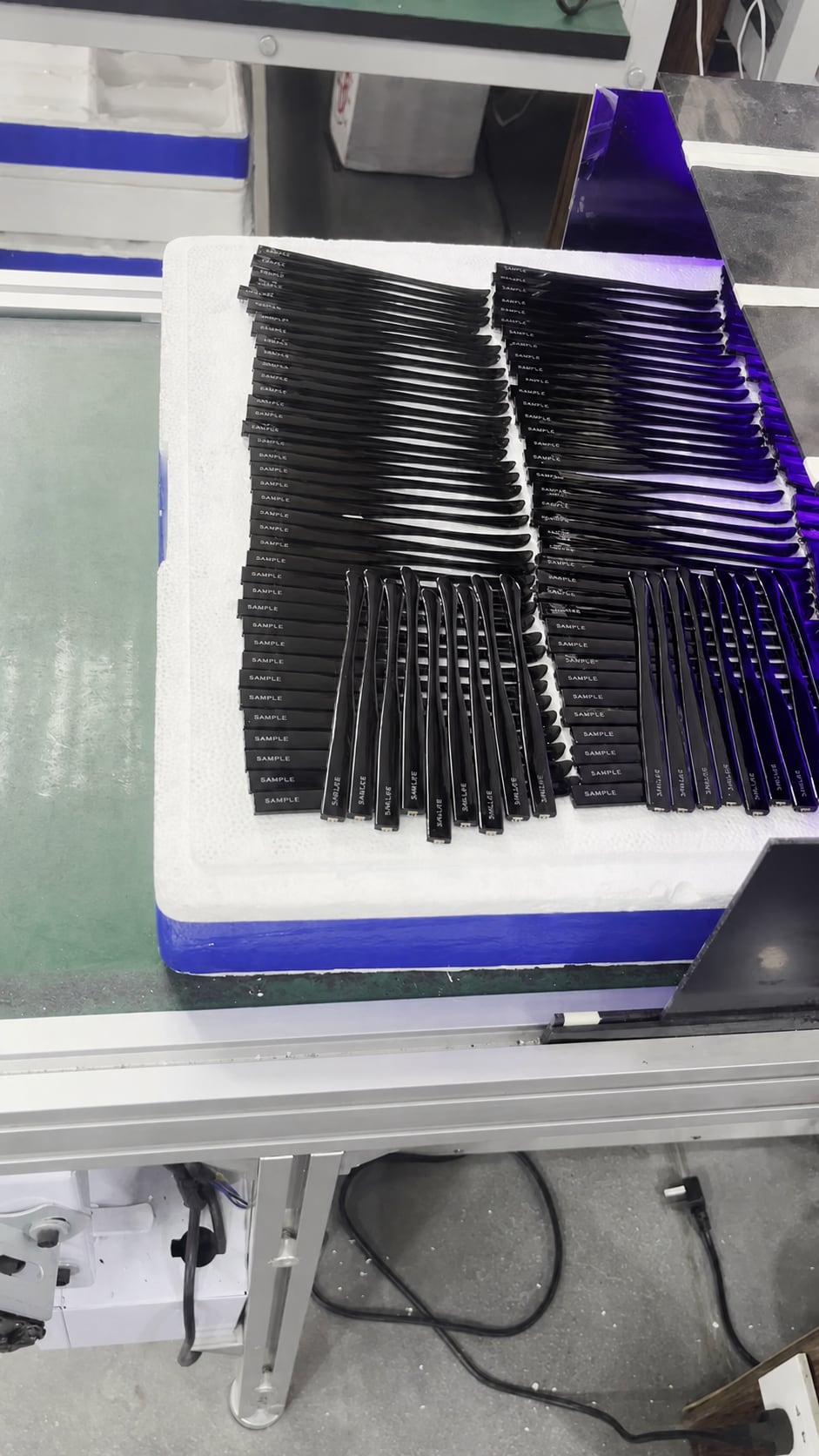
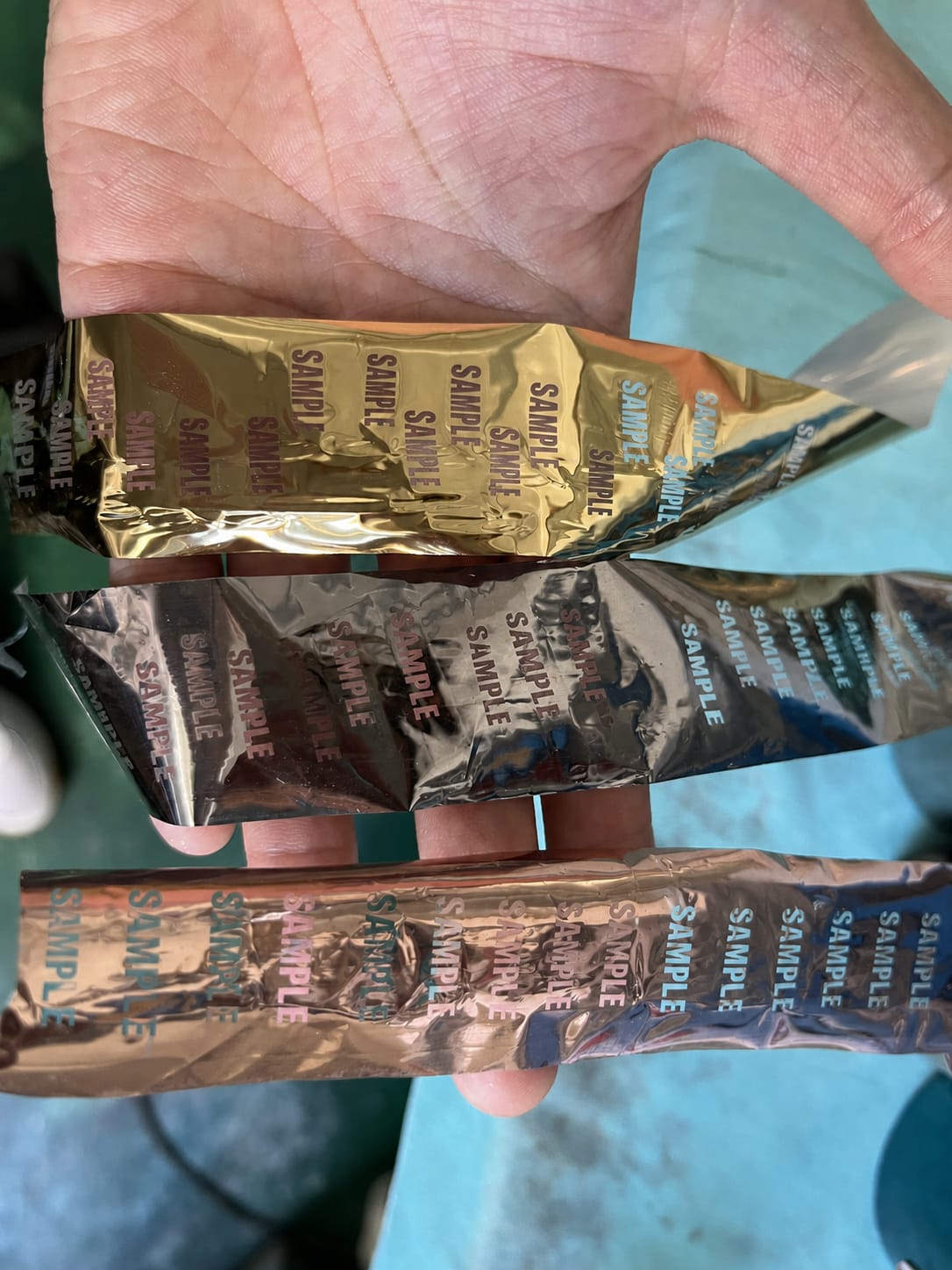
The selected foil is applied to form the visible metallic logo. The final appearance depends on the foil color, surface, approved sample and transfer setup.
Gold and silver are common options in the documented production workflow. Other metallic tones may be possible, but availability should be confirmed for the individual project because sourcing, quantity and sampling requirements can vary. Buyers should approve a physical result rather than relying only on an on-screen color.
Quality control starts with the artwork and continues through production. The operator should compare the work with the approved reference during processing, while line and packing inspections can identify visible inconsistencies before shipment preparation. A follow-up inspection should confirm the logo content, dimensions, location and overall appearance.
No process should be described as permanently peel-proof without a project-specific test method and acceptance criteria. The appropriate check depends on the substrate, surface treatment, foil system and intended use.
Production may need to pause when the artwork version, logo size, color or position remains disputed after setup begins. Last-minute changes also compete with scheduled work and equipment availability. A complete, accurate and specific production brief reduces avoidable interpretation and makes sample approval easier to document.
Include the approved artwork version, process, color, dimensions, left or right temple, inside or outside placement, and distance from a defined reference point.
It may be possible, but foil supply, project quantity and sampling requirements should be confirmed before production. Approve a physical sample for the intended surface.
In the workflow documented here, the base layer prepares the defined logo area for the subsequent metallic foil transfer and completes a required drying stage before the next operation.
Approve it before tooling or bulk production. The same approved reference should then be used for equipment setup and inspection.
Check the logo content, dimensions, position and visible finish against the approved reference, then apply the process-appropriate adhesion or surface checks agreed for the project.
If you are planning a private-label eyewear project, send the approved logo artwork together with the intended color, dimensions and temple placement. Jingseyewear can review whether the brief contains the information needed for sampling and production setup, while project-specific materials, finish availability and acceptance criteria remain subject to confirmation. Send your logo project details.


Please Read On, Stay Posted, Subscribe, And We Welcome You To Tell Us What You Think.



Copyright @ 2026 Xiamen Jings Eyewear Co., Ltd. All Rights Reserved.
 Network Supported