

For private label sunglasses buyers, the choice between polarized and non-polarized lenses is not only a product feature decision. It affects target users, retail positioning, lens cost, sample approval, packaging claims, and the questions your supplier must confirm before production. A dark lens can reduce brightness, but it does not automatically control reflected glare. A polarized lens is designed to reduce certain horizontal reflections from water, roads, snow, glass, and other bright surfaces, which can make it more suitable for driving, fishing, boating, beach, and outdoor collections.
This guide explains how private label buyers, importers, Amazon sellers, and eyewear brands can compare polarized and non-polarized sunglasses before placing a bulk order with an OEM/ODM eyewear manufacturer.
Choose polarized sunglasses when your collection targets outdoor use, driving, fishing, boating, beach travel, sports, or customers who care about glare reduction. Choose non-polarized sunglasses when your priority is fashion styling, lower entry cost, wider color flexibility, seasonal collections, or simpler first-order testing.
For a first private label order, many buyers start with several proven frame styles and compare both lens options through samples. Final confirmation should include lens color, UV400 requirement, polarized function, frame fit, logo position, packaging, and the claim language used on product pages or hangtags.
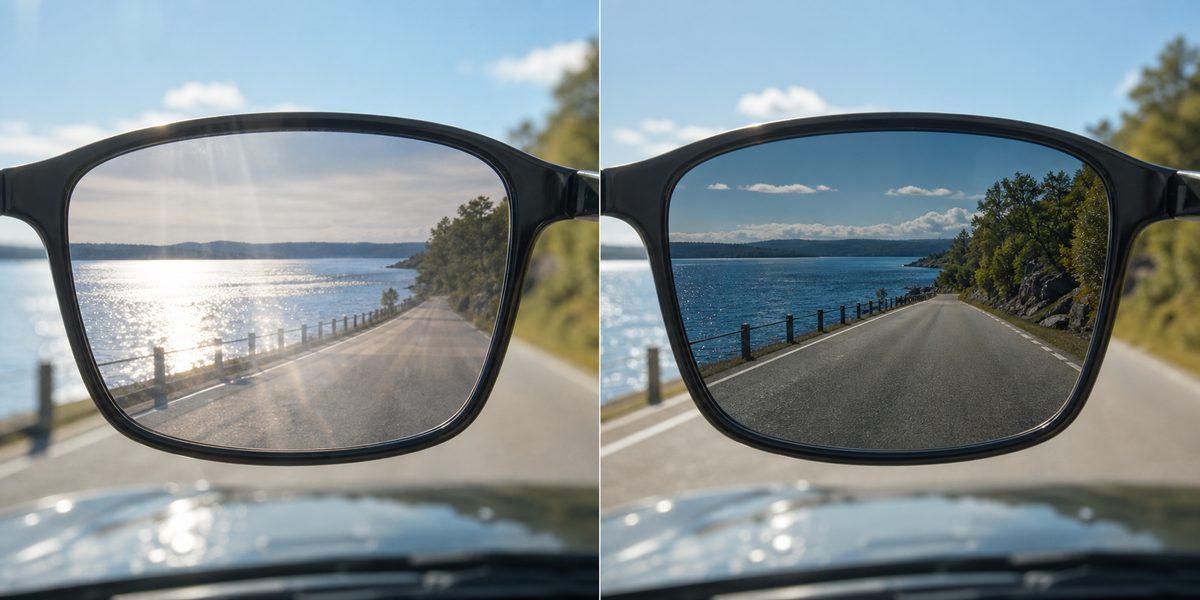 |
Why Glare Control MattersThis AI-assisted visual shows the buying logic clearly. Non-polarized lenses can make a bright scene darker, but reflected glare may still remain. Polarized lenses are selected when the buyer wants better visual comfort in glare-heavy environments. For private label projects, this difference should be explained in samples, product descriptions, and packaging claims. Discuss Lens Options |
A non-polarized sunglass lens is usually selected for tint, appearance, UV protection requirements, and price positioning. It can be suitable for fashion sunglasses, promotional sunglasses, seasonal collections, kids sunglasses, and style-led retail ranges. Buyers can choose many colors, gradients, mirror effects, and darkness levels depending on the product concept.
A polarized lens adds glare-reduction function. It is often used in outdoor sunglasses where reflected light can affect comfort. The buyer should not treat polarization as only a marketing word. It needs to be confirmed through lens samples, supplier communication, and packaging information before mass production.
| Lens Option | Best For | Buyer Notes |
| Non-polarized tinted lens | Fashion collections, promotional programs, seasonal styles, low-risk first orders | Confirm UV400, color, darkness, mirror or gradient effect, and sample consistency. |
| Polarized lens | Driving, fishing, beach, travel, outdoor sports, higher-value retail positioning | Confirm polarized function, lens material, UV400, test method, packaging claim, and final sample approval. |
| Mirror polarized lens | Outdoor brands, sports collections, performance-style sunglasses | Check coating appearance, color stability, surface marks, and sample-to-bulk consistency. |
Polarized sunglasses are a stronger fit when the product story depends on outdoor comfort and functional value. For example, an Amazon seller targeting driving sunglasses may benefit from a polarized option because the product feature is easy to explain. An outdoor brand may also prefer polarized lenses for sports and travel collections. Importers and distributors can use polarized models as a higher-value line beside regular fashion sunglasses.
However, polarized lenses are not automatically better for every project. If the collection is mainly style-driven, non-polarized lenses can be commercially safer because they allow more color variety and simpler pricing. The right decision depends on target market, retail channel, order quantity, price range, and the claims the buyer wants to make.
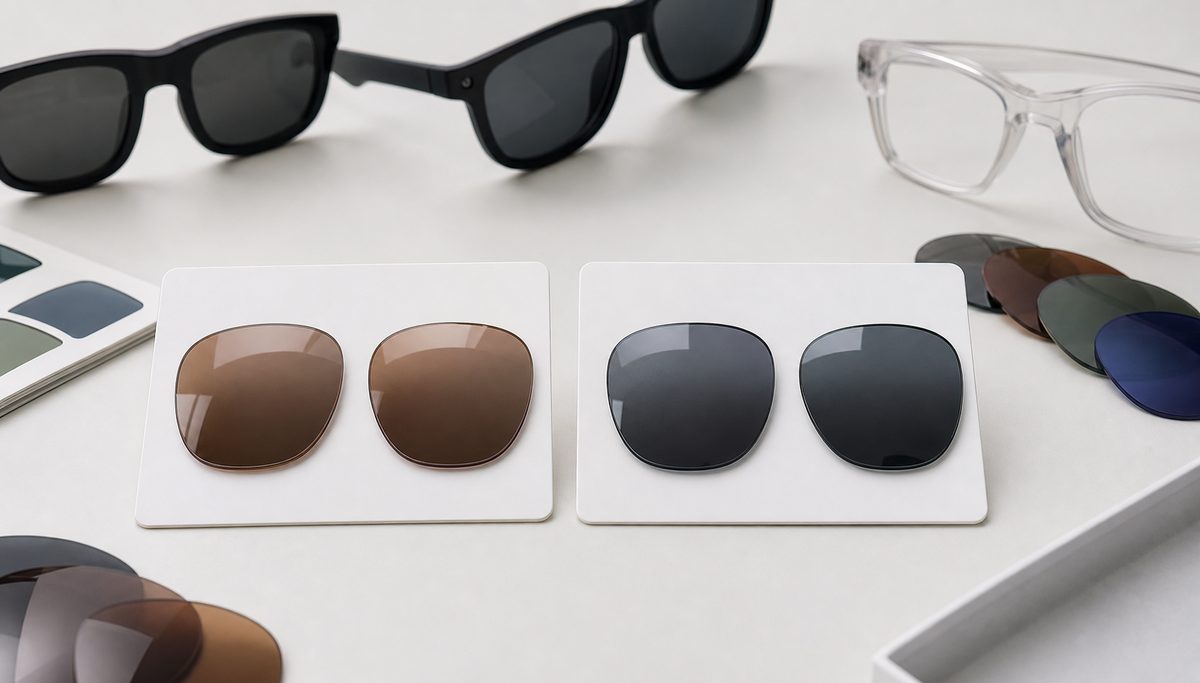 |
Sample Approval Should Separate Color and FunctionLens color and polarized function should be confirmed separately. A brown, gray, green, blue, or mirror lens can be either polarized or non-polarized depending on the selected material and structure. For private label orders, ask your supplier to confirm the lens material, UV400 requirement, polarized function, and final color sample before bulk production. Review OEM/ODM Services |
When requesting a quotation for polarized or non-polarized sunglasses, buyers should not only send a photo and ask for a price. The supplier needs enough details to match the right frame, lens, logo method, packaging, and order plan. Missing information can cause inaccurate pricing or sample delays.
Before confirming bulk production, sample approval should cover both visual details and functional requirements. For polarized sunglasses, buyers should pay special attention to whether the final sample matches the intended product claim. For non-polarized sunglasses, the focus is often on color accuracy, UV400 requirement, frame finish, and packaging presentation.
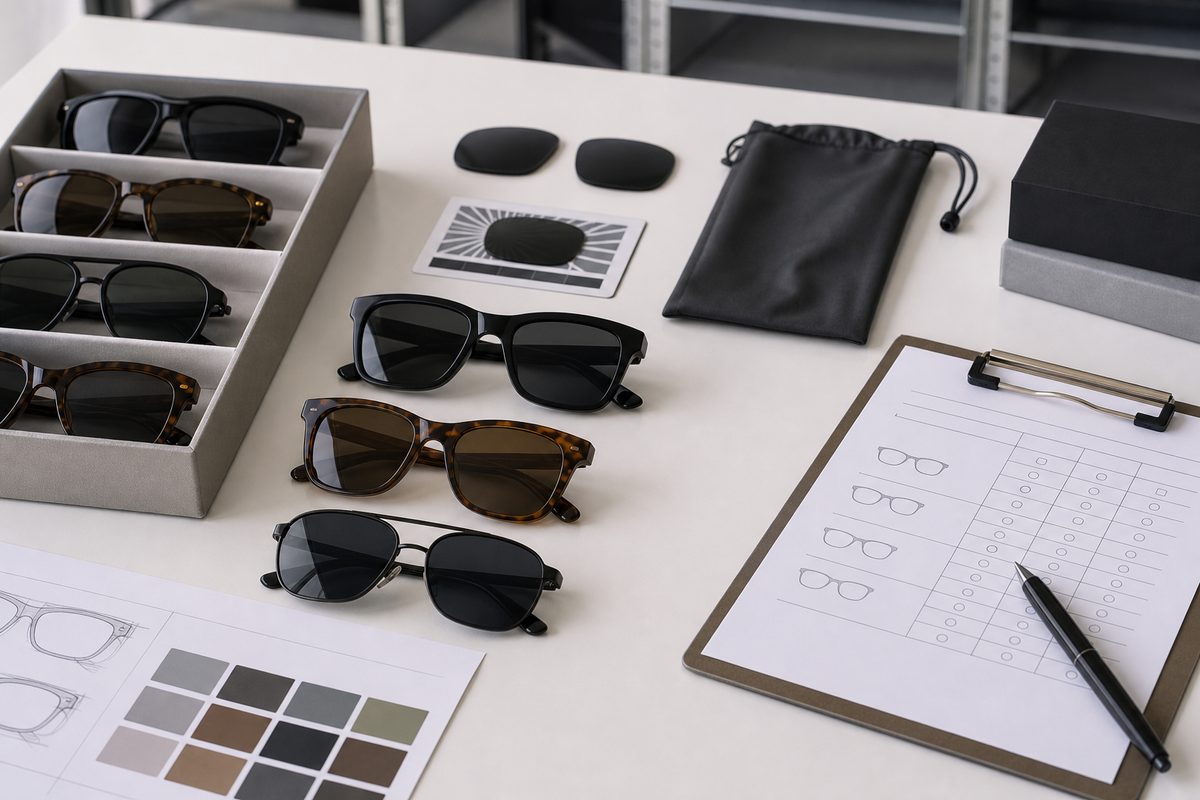 |
Check Samples Like a Buyer, Not Only Like a DesignerFrame shape, lens color, logo, packaging, and QC details should be reviewed together. A good-looking sample may still need adjustment if the lens claim, packaging wording, or fit does not match the target market. Jingseyewear can support OEM/ODM buyers with sample review, lens selection, logo customization, and quality inspection before shipment. Request Samples |
The most common mistake is assuming that a dark lens is automatically polarized. Another mistake is choosing a polarized lens for every SKU without checking whether the target customer will pay for the function. Buyers should also avoid approving only digital images. Lens color, glare effect, frame fit, and packaging details need physical sample confirmation.
For online sellers, product claim language must be especially careful. If a product is sold as polarized, the approved sample and supplier confirmation should support that claim. If the product is only UV400 tinted sunglasses, the product page should not imply polarized function.
Jingseyewear is an eyewear OEM/ODM manufacturer in Xiamen, China, supporting sunglasses, optical frames, sports sunglasses, kids eyewear, reading glasses, and eyewear accessories. For private label sunglasses projects, buyers can discuss existing styles, custom frames, lens options, logo methods, packaging plans, sample orders, and QC requirements before placing a bulk order.
If you are not sure whether polarized or non-polarized lenses fit your project, send your target market, frame style, quantity plan, price range, and packaging idea. The supplier can help compare practical options and prepare samples for confirmation.
Send your frame type, lens requirement, target market, quantity, logo plan, and packaging idea. Jingseyewear can help you compare polarized and non-polarized options for your private label sunglasses project.
Send Your Eyewear Project Details
No. Polarized lenses are useful for glare reduction, but non-polarized lenses can be better for fashion collections, lower-cost first orders, and wider color planning. The better option depends on your buyer type and product positioning.
Yes. UV400 and polarization are different requirements. A non-polarized lens can still be made with UV400 protection, depending on the selected lens and confirmed specification.
They can affect cost and sourcing complexity depending on lens material, color, coating, frame type, and quantity. Final details should be confirmed with the manufacturer before quotation and sample production.
Check the polarized effect, lens color, UV400 requirement, frame comfort, hinge movement, logo position, packaging, and whether the final sample matches your product claim and target retail price.
For private label buyers, polarized and non-polarized sunglasses are both useful when selected for the right commercial reason. The safest approach is to define your target customer first, then confirm frame style, lens function, sample quality, logo method, packaging, and QC requirements before bulk production.


Please Read On, Stay Posted, Subscribe, And We Welcome You To Tell Us What You Think.



Copyright @ 2026 Xiamen Jings Eyewear Co., Ltd. All Rights Reserved.
 Network Supported