
Building a private label eyewear collection is not the same as ordering a batch of sunglasses with your logo on it. A collection has a point of view — a coherent set of frame shapes, colors, materials, and price points that tell a story your target customer wants to buy into. Most first-time brand owners skip this planning step, order a random mix of styles, and end up with dead inventory. This guide walks you through how to work with an eyewear manufacturer to build a collection that actually sells.
When you order 5 different sunglasses styles from a factory, you have 5 products. When you plan a collection, you have a brand. The difference comes down to intentionality: every frame in a collection serves a purpose, fits a specific customer need, and shares visual DNA with the other pieces. A well-planned collection makes your brand look professional, helps customers find what they want faster, and reduces the risk of unsold inventory because each style targets a clear use case.
Before you contact a manufacturer, you should be able to answer three questions: Who is this collection for? What occasion or need does each style serve? How do the styles relate to each other visually?
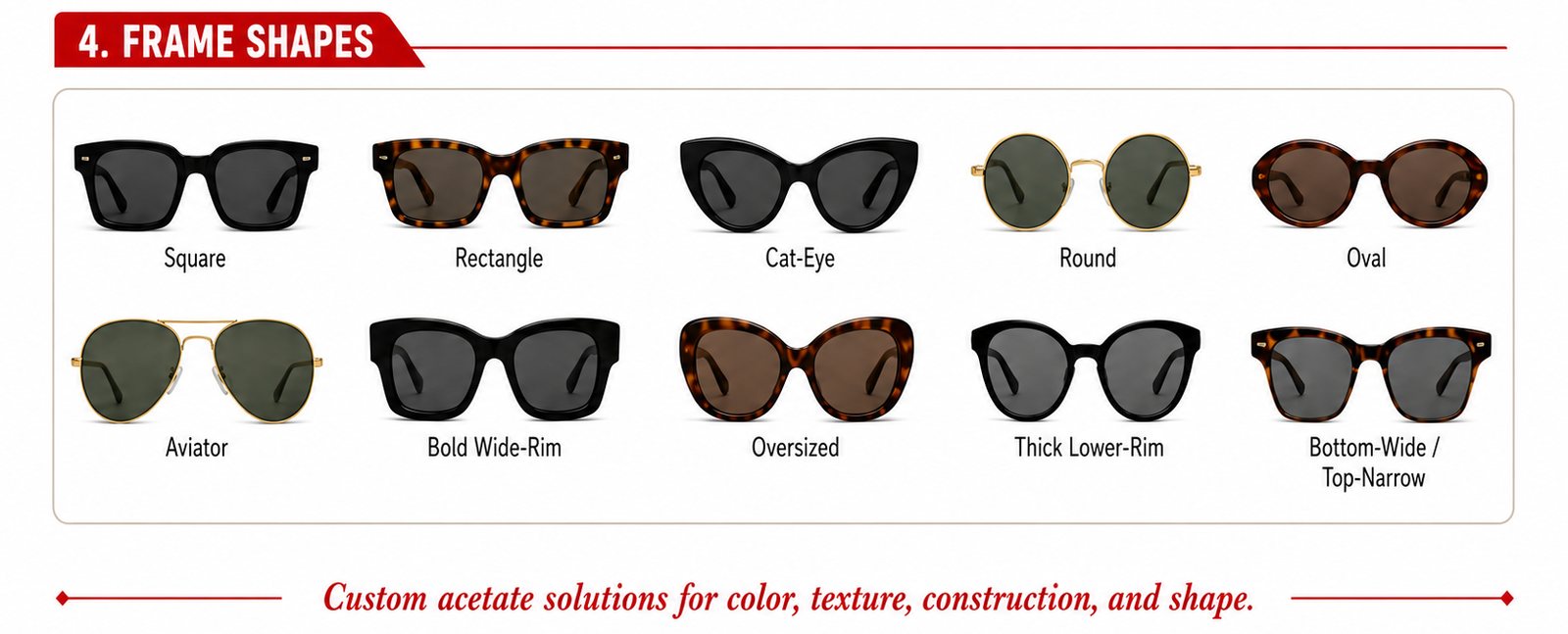 |
Choosing Frame Shapes That Work as a SetThis image shows the range of frame shapes available from a typical eyewear manufacturer. For a private label collection, you do not need every shape — you need 3-5 shapes that cover your target customer's main needs. A balanced collection usually includes one classic shape (wayfarer or aviator), one fashion-forward shape (oversized or geometric), and one versatile everyday shape (round or cat-eye). Each shape should be available in 2-3 colorways to give customers choice without overwhelming your inventory. Browse Fashion Sunglasses Request Frame Catalog |
Every collection decision flows from this. Are you targeting fashion-conscious women aged 25-40 who want statement frames? Budget-conscious travelers who need durable, affordable sunglasses? Outdoor enthusiasts who prioritize function? The more specific your target customer, the easier every subsequent decision becomes — frame shape, material, color, lens type, price point, and packaging.
A first collection typically includes 3-5 frame shapes. More than that and you spread your budget too thin; fewer than that and your range looks limited. Here is a practical framework for choosing shapes:
| Shape Role | Example Shapes | Purpose in Collection |
|---|---|---|
| The Anchor | Wayfarer, Aviator | Familiar, safe shape that appeals to the widest audience. This is your bestseller candidate. |
| The Statement | Oversized, Geometric, Cat-Eye | Fashion-forward shape that defines your brand's visual identity. Lower volume but higher brand impact. |
| The Everyday | Round, Oval, Browline | Versatile shape for daily wear. Complements the anchor and statement pieces. |
| The Niche (optional) | Wrap, Shield, Sport | Serves a specific use case — driving, beach, cycling. Adds range without competing with your core shapes. |
Color is one of the most important decisions in a private label eyewear collection. It affects MOQ, production complexity, and how your brand looks on a shelf or in a product grid. A good color strategy balances variety with efficiency — enough options to attract different customers, but not so many that you end up with slow-moving inventory.
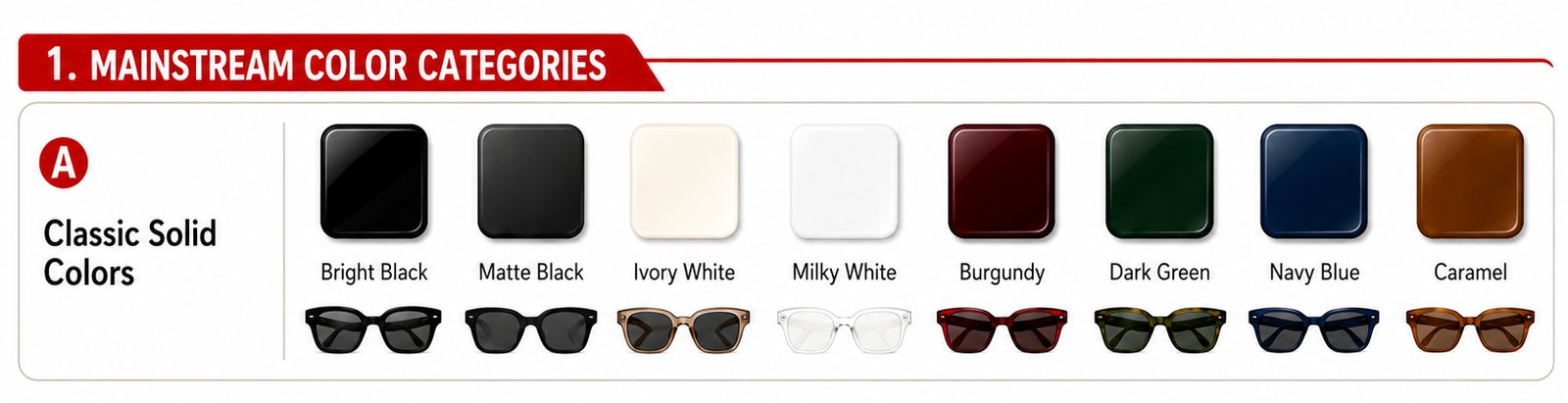 |
How to Choose Colors That SellThis image shows the range of color options available for acetate frames. For a first collection, start with 3 color categories: neutrals (black, tortoise, clear) for consistent sales, fashion colors (burgundy, olive, navy) for brand identity, and one accent color (translucent pink, amber, blue) for seasonal interest. Each frame shape should be available in 2-3 colors from these categories. This gives you enough variety without the complexity of managing 15+ color SKUs. View Acetate Sunglasses Discuss Color Options |
Frame material affects the look, feel, weight, durability, and price of your sunglasses. It also affects MOQ and production complexity. Here is how to think about material selection in the context of building a collection:
You do not need to limit your collection to one material. Many successful brands mix materials — for example, acetate frames for their fashion line and PC frames for their everyday line. The key is that each material choice should be intentional and match the price point and positioning of that specific style.
Your logo is how customers remember your brand. The placement, size, and method should be consistent across all styles in your collection to create a unified brand look:
Whichever method you choose, apply it consistently across your entire collection. A mix of engraving on some frames and printing on others makes the collection look disjointed. Learn About Logo Customization
Packaging is part of the product. For a private label collection, your packaging should reinforce your brand positioning:
| Brand Position | Recommended Packaging | Budget Range (per unit) |
|---|---|---|
| Budget / Everyday | Soft pouch + lens cloth + branded tag | $0.30 - $0.80 |
| Mid-Range | Hard case + lens cloth + branded tag + care card | $1.00 - $2.50 |
| Premium / Gift | Premium rigid box + hard case + lens cloth + branded materials + sleeve | $2.50 - $5.00+ |
The biggest challenge for new brand owners is balancing variety with minimum order quantities. Here is a realistic planning framework:
The quality of your collection depends on the quality of your communication with the manufacturer. Before requesting a quotation, prepare the following information:
| Information | Why the Manufacturer Needs It |
|---|---|
| Target market (US, EU, Middle East, etc.) | Affects compliance requirements (CE, FDA), face fit preferences, and color trends |
| Brand positioning and price point | Determines material, finish, and packaging recommendations |
| Reference images or competitor samples | Helps the manufacturer understand your aesthetic and quality expectations |
| Logo file (vector format preferred) | Required for accurate logo placement and method selection |
| Packaging preferences | Affects unit cost, production timeline, and MOQ |
| Quantity range per SKU | Determines pricing, MOQ feasibility, and production scheduling |
| Desired delivery date | Helps plan production timeline and identify any rush fees |
Jingseyewear works with brand owners, startups, and retailers to develop custom eyewear collections from concept to production. Send us your brand concept, target market, and style preferences, and we will help you plan a collection that fits your budget and your customers.
Send Your Eyewear Project Details
For a first collection of 6-12 SKUs with 200-300 pairs per SKU, budget approximately $3,000-$8,000 for the sunglasses themselves, plus $500-$1,500 for samples, logo setup, and packaging design. The total first order investment typically ranges from $4,000-$10,000 depending on material, customization level, and packaging choices. These are industry-level estimates — confirm specific pricing with your manufacturer based on your exact specifications.
The timeline depends on customization level. For in-stock frames with custom logo and packaging: 20-30 days for production, plus 15-30 days for shipping. For fully custom frames with new designs: 35-50 days for production, plus shipping. Plan for a total of 6-10 weeks from sample approval to delivery for a standard first order.
Yes, and many successful brands do. For example, you might use acetate for your fashion-forward styles and PC or TR90 for your everyday essentials. The key is that each material choice should match the price point and positioning of that specific style. Mixing materials also lets you offer a wider price range within your collection, appealing to different customer segments.
Starting with 2-3 styles is a smart approach, especially for your first order. It reduces risk, keeps your investment manageable, and lets you test the market before expanding. Many successful eyewear brands started with just 2-3 styles and grew their collection based on customer feedback and sales data. The important thing is that even with 2-3 styles, you should plan them as a cohesive mini-collection — consistent branding, complementary shapes, and a shared color palette.
Whether you are launching your first eyewear collection or expanding an existing brand, Jingseyewear can help you plan, sample, and produce a collection that fits your market. Low MOQ, OEM/ODM support, and structured quality control at every stage.
Send Your Inquiry
Building a private label eyewear collection is a process, not a single order. Start with a clear vision of your target customer, plan your shapes and colors intentionally, choose materials that match your positioning, and work closely with your manufacturer from sample to production. The brands that succeed are the ones that treat each collection as a strategic business decision, not a sourcing transaction.


Please Read On, Stay Posted, Subscribe, And We Welcome You To Tell Us What You Think.



Copyright @ 2026 Xiamen Jings Eyewear Co., Ltd. All Rights Reserved.
 Network Supported