

Selling sunglasses on Amazon looks simple on the surface: find a supplier, slap your logo on a frame, ship to FBA, and watch the orders come in. In reality, most Amazon sellers who fail at eyewear make the same mistakes — they choose the cheapest supplier without verifying quality, skip pre-shipment inspection, use packaging that arrives damaged, or launch too many SKUs before understanding what actually sells. This guide walks you through the sourcing decisions that separate successful Amazon eyewear sellers from those stuck dealing with returns, negative reviews, and stranded inventory.
If you are sourcing sunglasses for Amazon, here is the short version: start with 2-3 proven frame styles in neutral colors, order samples before committing to bulk, work with a supplier who has experience with Amazon FBA packaging requirements, and always perform or request a pre-shipment inspection. A typical first order for custom private label sunglasses from a Chinese manufacturer starts around 300-500 pairs per style, depending on the frame material and customization level. The goal of a first order is not maximum profit — it is learning what your customers actually want before you scale.
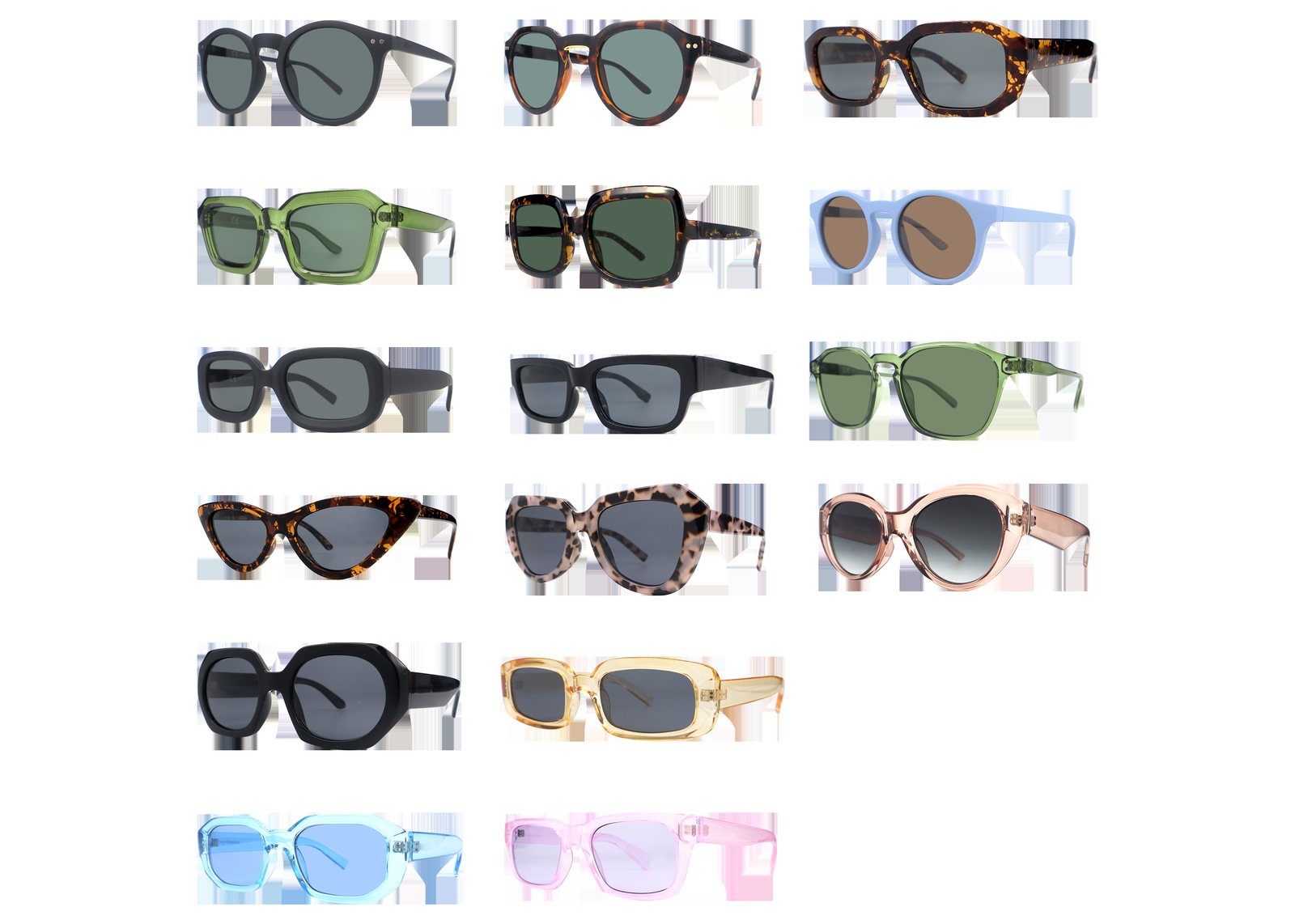 |
Why SKU Selection Matters More Than PriceThis image shows the range of frame styles a typical eyewear manufacturer can produce. For Amazon sellers, the temptation is to order 10 different styles at low MOQ — but this spreads your budget thin, complicates inventory management, and makes it harder to get meaningful sales data on any single SKU. The smarter approach: start with 2-3 styles in proven shapes (aviator, wayfarer, round) in 2-3 neutral colorways each. Once you identify your best sellers through real sales data, expand from there. Browse Fashion Sunglasses Styles Request Product Catalog |
Not every sunglasses factory is a good fit for Amazon sellers. The supplier you choose needs to understand more than just manufacturing — they need to understand FBA packaging, labeling requirements, and the quality standards that prevent negative reviews. Here are the key criteria to evaluate:
Before you wire money to a supplier, make sure you have confirmed the following. Skipping any of these steps is how Amazon sellers end up with unsellable inventory:
| Check Item | What to Confirm | Why It Matters for Amazon |
|---|---|---|
| Frame material | PC, TR90, acetate, or metal — confirm exact material | Material affects weight, durability, and customer reviews |
| UV400 protection | Request UV400 test report or confirm lens spec | Amazon buyers check UV protection; false claims cause returns |
| Logo placement | Position, size, method (engrave, print, metal tag) | Incorrect logo is expensive to fix after production |
| Packaging type | Case, pouch, box — and whether it meets FBA requirements | Damaged packaging = negative reviews and returns |
| Lens color options | Confirm available lens colors and whether they affect MOQ | Some lens colors require higher MOQ or longer lead time |
| Sample approval | Order production sample, not just a display sample | Display samples may not represent actual production quality |
The frame material you choose affects weight, durability, comfort, price point, and ultimately your customer reviews. Here is a practical comparison for Amazon sellers:
| Material | Pros | Cons | Best For |
|---|---|---|---|
| PC (Polycarbonate) | Low cost, lightweight, impact-resistant | Less premium feel, limited color options | Budget-friendly listings, high-volume sales |
| TR90 | Very lightweight, flexible, comfortable | Higher cost than PC, fewer frame shape options | Comfort-focused listings, sporty styles |
| Acetate | Premium look, rich colors, good for branding | Heavier, higher MOQ, longer production time | Mid-to-premium listings, fashion-forward brands |
| Metal | Durable, classic look, premium feel | Heavier, can cause skin reactions if not coated | Classic aviators, premium gift sets |
For most Amazon sellers starting out, PC or TR90 frames offer the best balance of cost, durability, and customer satisfaction. Acetate and metal are better suited for sellers who have already validated their market and are ready to move into higher price points. View PC and TR90 Sunglasses | View Acetate Sunglasses
Amazon FBA is rough on products. Packages are dropped, stacked, and handled by multiple automated systems. For sunglasses, packaging failures mean scratched lenses, bent frames, and damaged cases — all of which lead to returns and negative reviews. Here is what your packaging needs to survive:
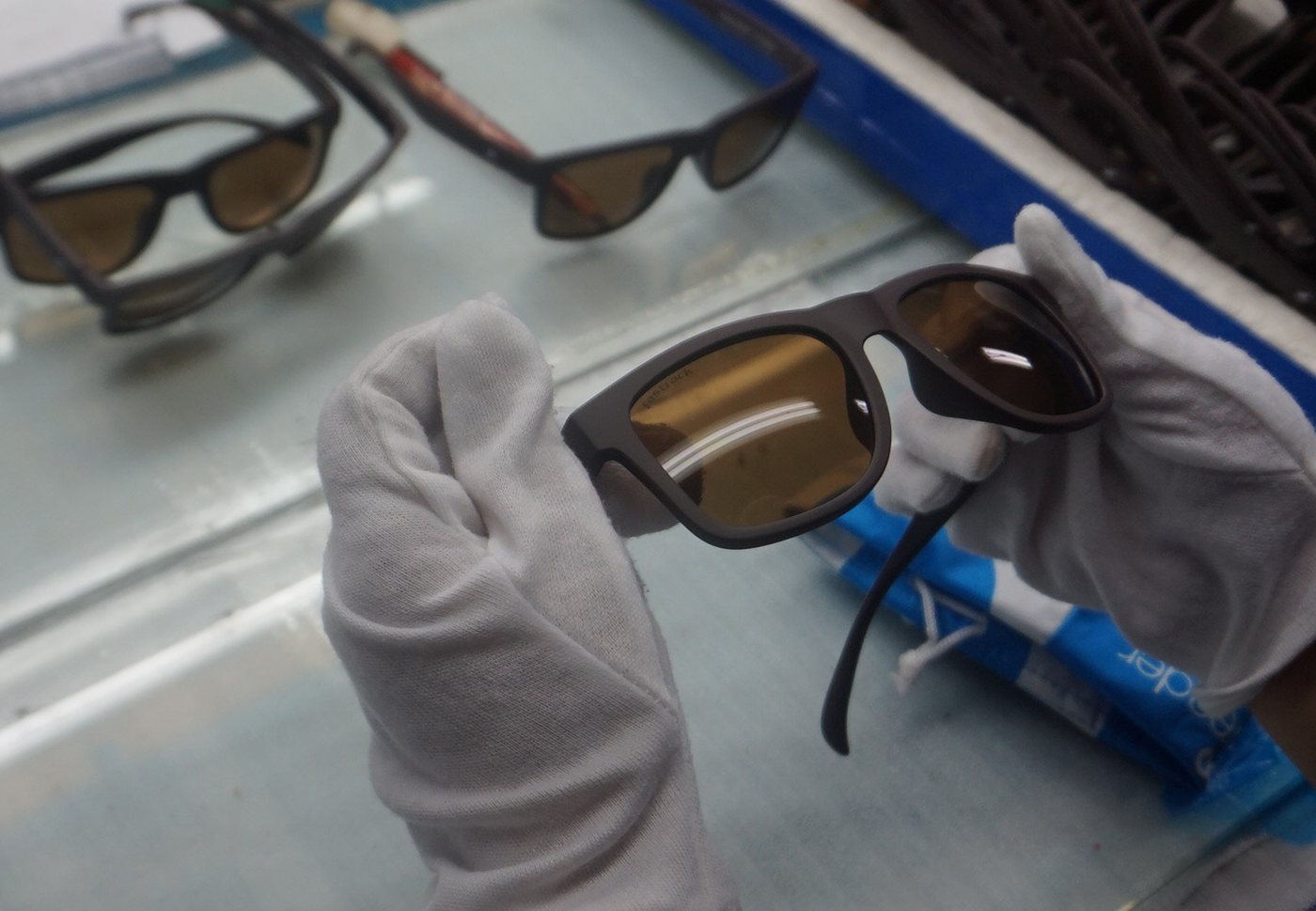 |
Why Pre-Shipment Inspection Protects Your Amazon AccountThis image shows a structured pre-shipment inspection in progress. For Amazon sellers, this step is non-negotiable. A single batch of defective sunglasses can trigger a wave of negative reviews, increase your return rate above Amazon's threshold, and put your listing at risk of suppression. The cost of a pre-shipment inspection — whether done by your supplier, a third-party service, or yourself — is a fraction of the cost of dealing with a quality crisis after the goods are in FBA. Always inspect before the goods leave the factory. Learn About Our QC Process Discuss QC Standards |
After analyzing negative reviews on Amazon sunglasses listings, the same quality issues come up again and again. Understanding these issues before you order helps you set the right quality expectations with your supplier:
The biggest mistake new Amazon eyewear sellers make is ordering too many SKUs on the first order. Here is a more strategic approach:
Learn from the mistakes of other Amazon sellers so you do not have to make them yourself:
Jingseyewear works with Amazon sellers and e-commerce brands to provide private label sunglasses with FBA-ready packaging, low MOQ for first orders, and structured quality control. Send us your product requirements — frame style, material, quantity, logo, packaging — and we will provide a tailored quotation and sample plan.
Send Your Eyewear Project Details
For custom private label sunglasses with your logo and packaging, typical MOQ ranges from 300 to 500 pairs per style per color. Some suppliers offer lower MOQ for in-stock frames with logo customization only. The exact MOQ depends on the frame material, level of customization, and the supplier's production schedule. For first orders, many manufacturers are willing to negotiate MOQ to help new sellers get started.
Production lead time varies by order complexity. For in-stock frames with custom logo and packaging, production typically takes 15-25 days. For fully custom frames (new mold, custom material, custom lens), lead time can extend to 35-50 days. Always confirm lead time before ordering, especially if you have a specific launch date on Amazon.
Many experienced eyewear manufacturers can handle FBA-specific requirements including poly bagging, FNSKU labeling, and carton specifications. However, not all suppliers are familiar with Amazon's requirements. Before placing your order, send your supplier the specific FBA packaging and labeling guidelines and confirm they can comply. If they cannot, you may need to use a third-party prep center near the port of entry.
Prevention is cheaper than returns. A structured pre-shipment inspection catches most quality issues before the goods leave the factory. If you do receive defective goods, document the issues with photos and contact your supplier immediately. For Amazon specifically, keep your return rate below 4-5% to maintain listing health. If a batch has a defect rate above your agreed AQL, negotiate rework, replacement, or a credit with your supplier.
Jingseyewear provides private label sunglasses with low MOQ, FBA-ready packaging, and quality inspection at every production stage. Whether you are launching your first eyewear SKU or expanding an existing Amazon brand, we can help you source the right products at the right quality level.
Send Your Inquiry
Sourcing sunglasses for Amazon is not just about finding the lowest price — it is about finding a supplier who understands your market, your packaging requirements, and your quality expectations. Start small, test thoroughly, inspect before shipping, and scale based on real data. The sellers who build lasting eyewear brands on Amazon are the ones who treat sourcing as a long-term partnership, not a one-time transaction.


Please Read On, Stay Posted, Subscribe, And We Welcome You To Tell Us What You Think.



Copyright @ 2026 Xiamen Jings Eyewear Co., Ltd. All Rights Reserved.
 Network Supported